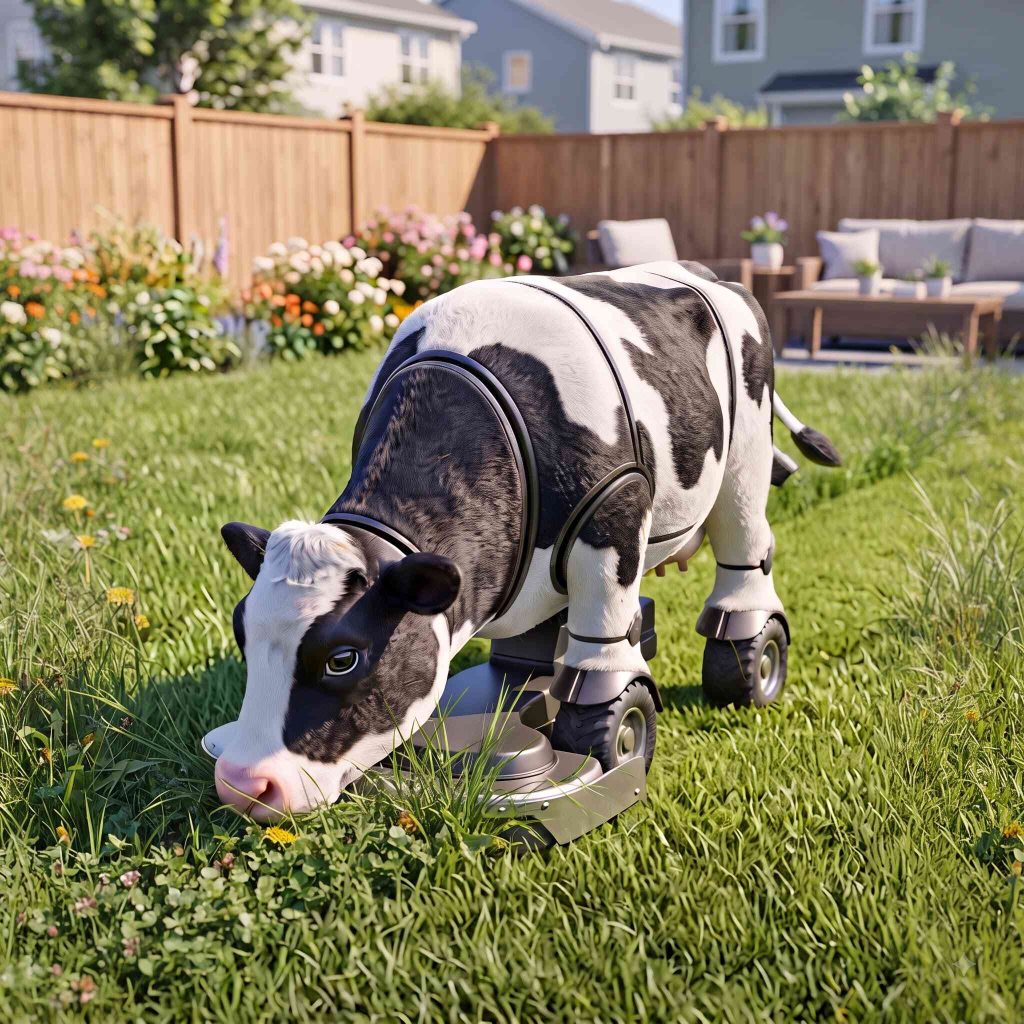
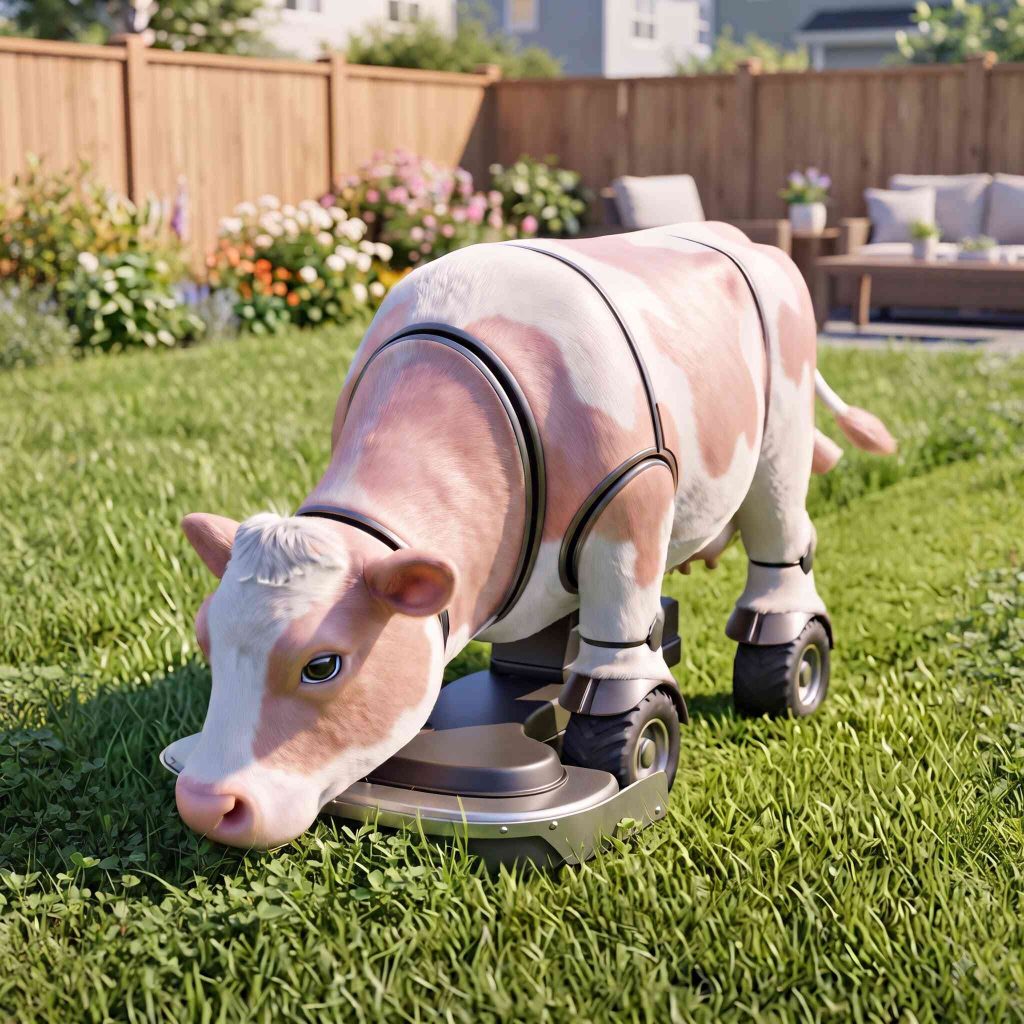
If you’ve spent any time scrolling through gardening forums or neighborhood Facebook groups lately, you’ve probably noticed a strange little trend creeping across suburban lawns: robotic mowers dressed up like cows. Black and white splotches. Little felt ears. The occasional set of foam horns bobbing along as the machine quietly does its rounds. It sounds like a joke at first, but the Robot Cow Lawn Mower trend has genuine staying power, and honestly, once you see one in action, it’s hard not to smile.
This isn’t about function over form anymore. Robotic mowers have gotten so good at their actual job — cutting grass efficiently, avoiding obstacles, docking themselves to recharge — that people have started asking a different question. If the machine is going to be crawling across my yard every day anyway, why shouldn’t it look like something fun?
Why the Cow Theme Works So Well
There’s something almost perfect about the marriage of cows and lawn mowers. Cows graze. Mowers “graze” too, in their own mechanical way, moving slowly and methodically across a patch of grass. The visual logic just clicks. Add in the fact that most robotic mowers are compact, low to the ground, and roughly the size of a large dog or a small calf, and you’ve got a shape that’s already halfway to looking like a barnyard animal before you’ve done anything to it.
There’s also a nostalgic, whimsical appeal. A Robot Cow Lawn Mower turns yard maintenance — historically one of the more tedious weekend chores — into something with a bit of personality. Neighbors stop and point. Kids get excited watching it “graze.” It becomes a conversation piece rather than just an appliance humming away in the background.
DIY Design Ideas Worth Trying
If you’re the type who likes tinkering on weekends, dressing up a robotic mower is a surprisingly approachable project. Here are some directions people have taken with it.
Classic Holstein Pattern
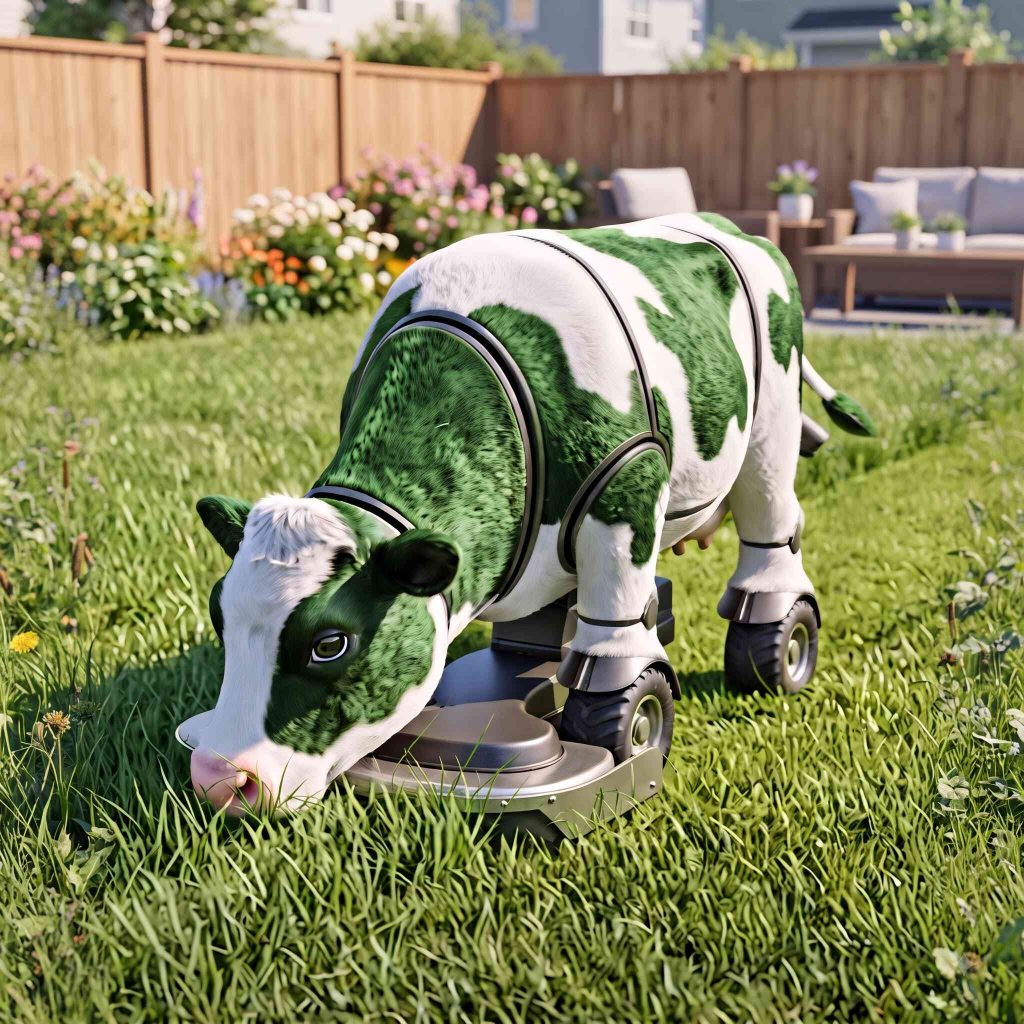
The most recognizable option is the black-and-white Holstein pattern, achieved with vinyl wrap, adhesive patches, or even carefully applied outdoor-safe paint. The trick is keeping any material away from the mower’s sensors, charging contacts, and blade housing. A rounded, irregular patch pattern reads as “cow” far more convincingly than sharp geometric shapes.
Ears and Horns
Lightweight, weatherproof ears made from foam or felt can be mounted using a small bracket or hook-and-loop fastener so they’re removable before the mower goes in for maintenance. Horns tend to work best when kept short and rounded — anything too tall risks catching on low branches or garden furniture, and safety should always come before style.
A Wagging Tail
Some hobbyists have rigged up a small fabric tail on a flexible wire mount at the rear of the unit. It sways gently as the mower moves, which somehow makes the whole illusion feel alive. This is purely a novelty touch, but it’s often the detail that gets the biggest reaction from onlookers.
Moo Sound Effects
A few tech-savvy owners have experimented with small, weatherproof speaker modules triggered by the mower’s movement sensors, playing a soft “moo” at intervals. This one takes more electronics know-how, and it’s worth checking your mower’s warranty terms before opening up the casing, but it’s one of the more memorable ideas out there.
Grazing-Themed Yard Signage
Even without modifying the mower itself, you can lean into the theme with small wooden signs near the “pasture” — things like “Caution: Grazing in Progress” or a tiny fence post marker. It’s a low-effort way to build the whole scene without touching the hardware at all.
Creative Placement and Landscaping Ideas
Design doesn’t stop at the mower itself. Where and how it operates in your yard can reinforce the theme.
Consider creating a small “pasture zone” using decorative low fencing or a painted boundary line, purely visual, that frames the area where the mower does most of its work. Some homeowners add a tiny hay bale planter or a miniature red barn birdhouse nearby as a backdrop. Others go further and coordinate the whole front yard around a farm motif, with sunflower borders, a rustic mailbox post, and a gravel path that looks like a country lane.
If you have kids, this is also a fun way to turn a mundane chore into something educational. Explaining how the “robot cow” navigates using sensors, follows boundary wires, and returns home to “eat” (recharge) can be a surprisingly effective, hands-on way to introduce basic robotics concepts.
Seasonal and Holiday Variations
Because the cow theme is essentially a costume, it lends itself well to rotation. A few ideas that have popped up in online mower communities:
- Spring: Fresh daisy chain accents around the “collar” area
- Summer: A straw hat mounted just above the sensor array (carefully positioned so it doesn’t block navigation)
- Autumn: Small pumpkin-patch-style decorations placed nearby, with the mower “grazing” among them
- Winter: A knit scarf, so long as it’s kept clear of moving parts and wheels
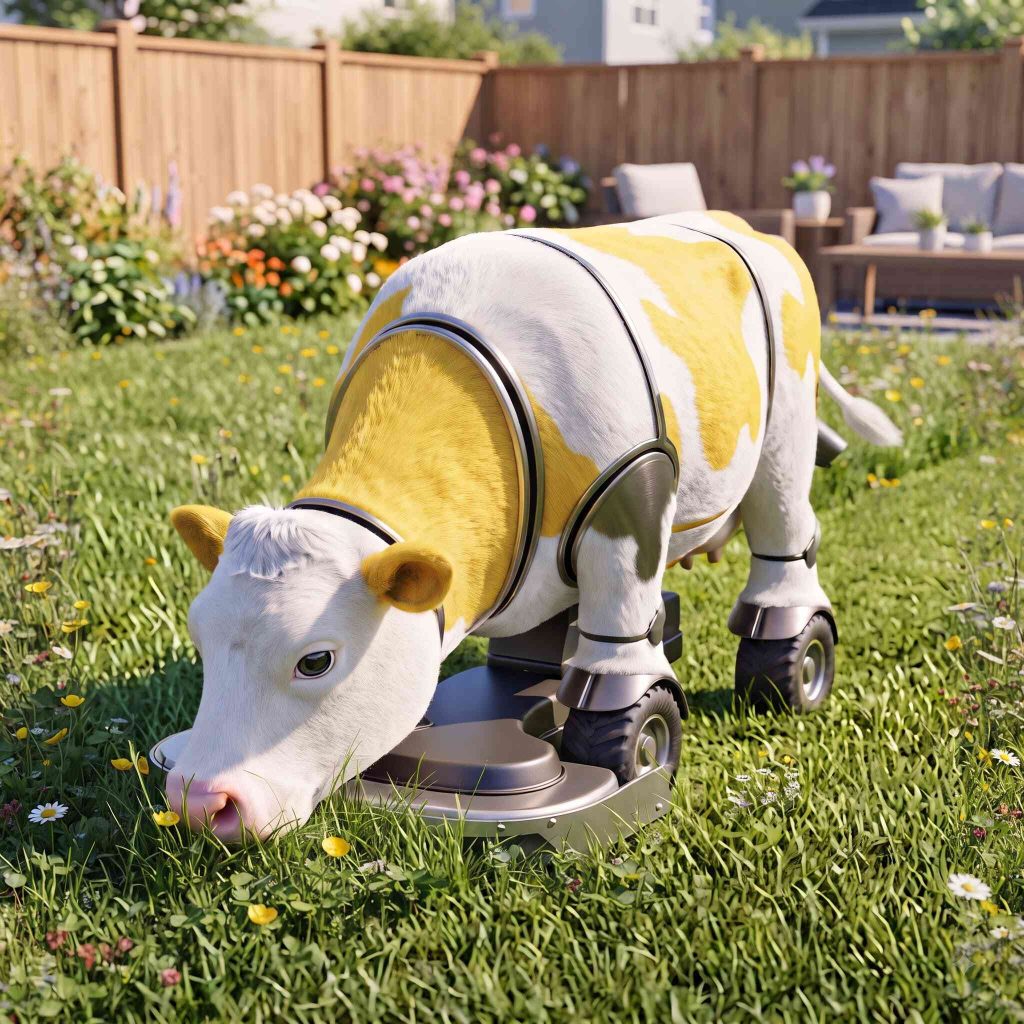
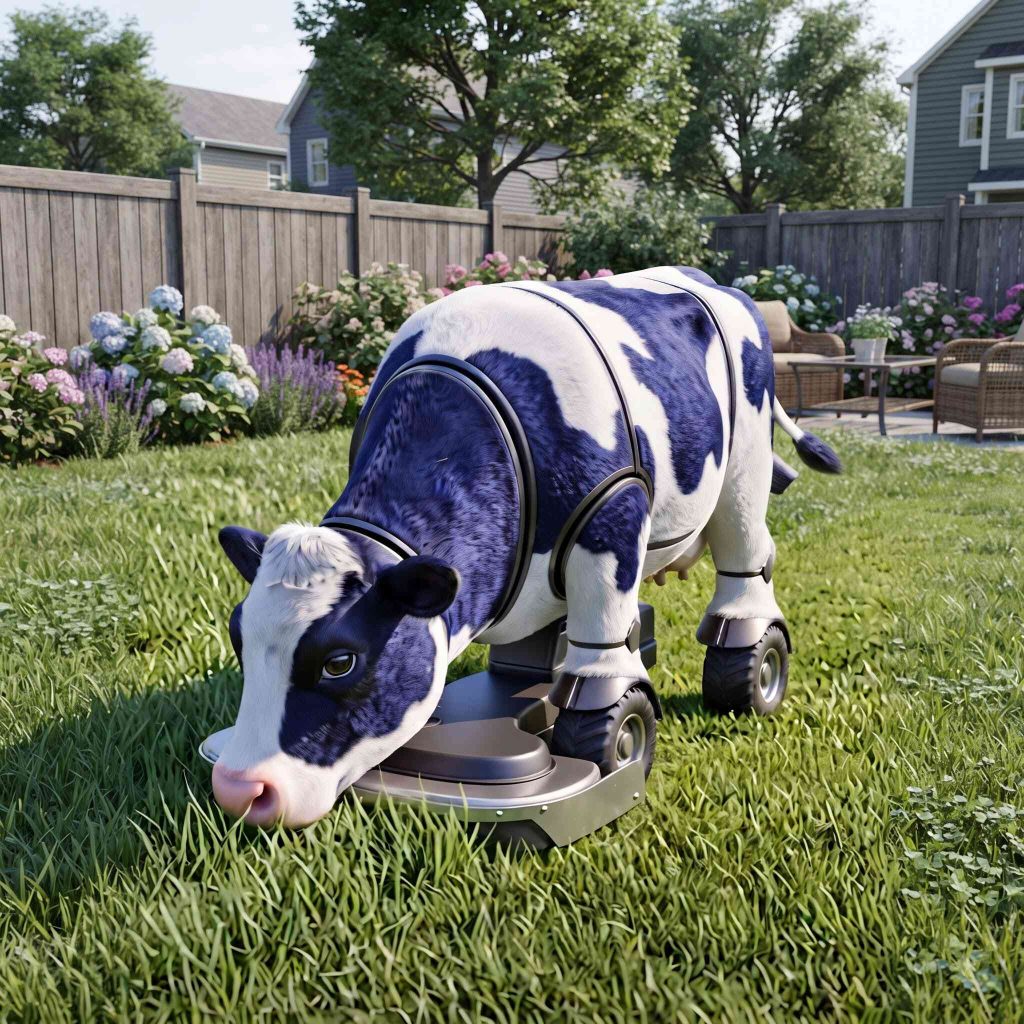
The rotating-costume approach also keeps the novelty fresh. A mower that looks the same every day eventually blends into the background, but a Robot Cow Lawn Mower that changes with the seasons stays a talking point year-round.
A Few Practical Notes
Before diving into any modification, it’s worth being sensible about it. Robotic mowers rely on sensors — often ultrasonic, infrared, or camera-based — to detect obstacles, pets, and people. Any decorative addition should avoid covering these components. Materials should be weather-resistant and lightweight, since anything heavy or bulky can throw off balance or strain the motor. And ventilation matters too; these machines generate heat during operation, so airflow around the body shouldn’t be blocked by costume elements.
It’s also worth checking your specific mower’s manual, since some manufacturers have particular guidance about what can and can’t be attached to the casing without affecting performance or safety certifications.
Final Thoughts
What’s interesting about the Robot Cow Lawn Mower trend is how it captures something bigger happening with home robotics in general. As these devices become more common and more capable, people are starting to treat them less like sterile gadgets and more like small companions with a role in the household. Giving one a bit of personality, whether that’s a Holstein paint job, a pair of felt ears, or a gentle “moo” every few minutes, is a playful way of embracing that shift.
You don’t need advanced engineering skills to get started. Even a simple black-and-white pattern and a pair of ears can transform an ordinary mowing routine into something your neighbors talk about. And if you’re the kind of person who enjoys small creative projects around the house, this is about as low-stakes and high-reward as it gets: a bit of paint, a little imagination, and a lawn that suddenly has its own quirky character grazing across it every afternoon.