Every year, thousands of people find themselves in life-threatening situations in open water — swimmers caught in a rip current, boaters thrown overboard, or victims of accidents near coastlines and rivers. Traditional rescue methods, while effective in many cases, often depend on how quickly a human responder can reach the scene. In emergencies, every second counts, and the gap between distress and rescue can mean the difference between life and death.
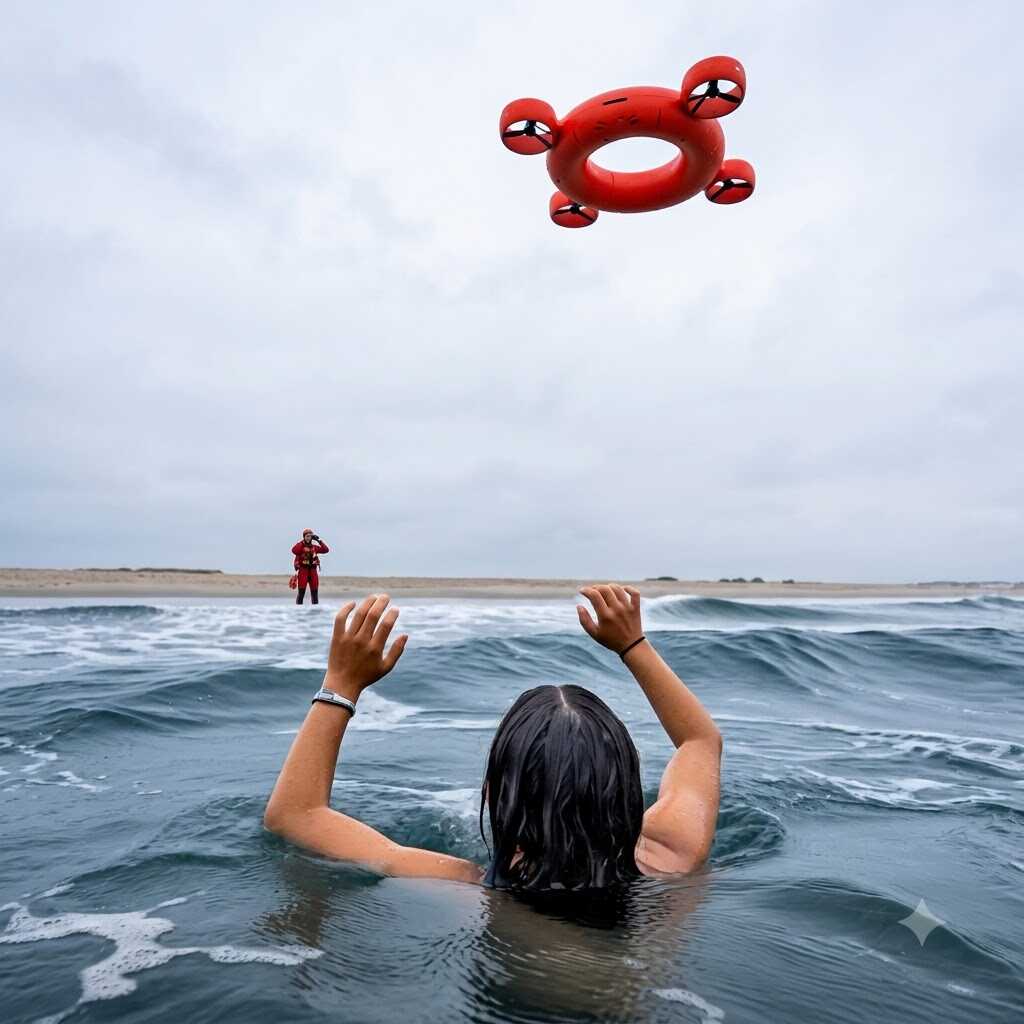
This is where the idea of a “life preserver with drone” comes into play. It’s a concept that merges two very different worlds — the decades-old simplicity of a flotation device and the fast-evolving technology of unmanned aerial vehicles (UAVs). Instead of waiting for a lifeguard, boat, or helicopter to physically reach a person in distress, a drone equipped with a deployable life preserver can be dispatched within moments, flying directly to the location and dropping a flotation device precisely where it’s needed.
In this article, we’ll explore how this concept works, why it’s gaining attention among rescue teams and technology enthusiasts alike, and what the future might hold for drone-assisted water rescue systems.
What Exactly Is a Life Preserver With Drone?
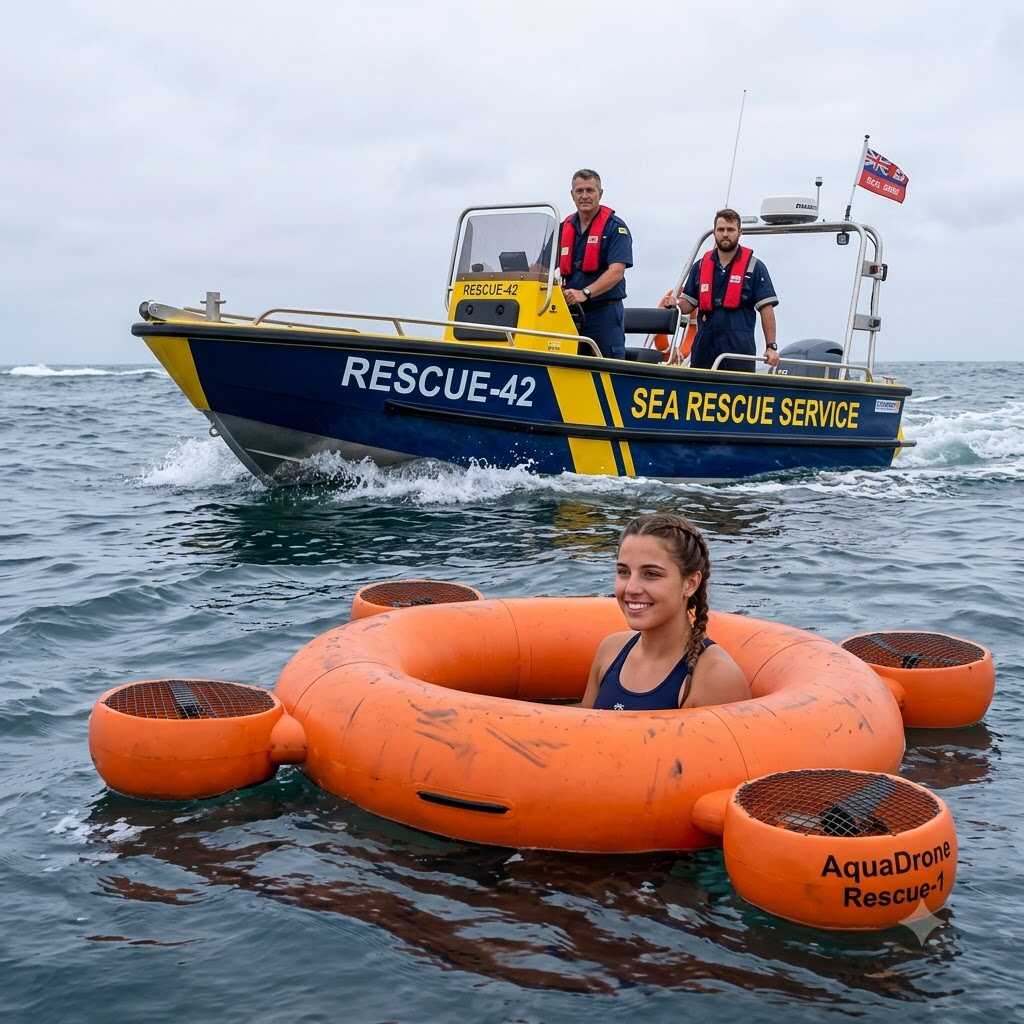
At its core, a life preserver with drone is a rescue system where an unmanned aerial vehicle carries a flotation device — such as an inflatable ring, vest, or buoy — and delivers it to a person struggling in water. The drone is typically controlled remotely by a trained operator, though some advanced prototypes are being designed with semi-autonomous or fully autonomous capabilities using GPS tracking and computer vision.
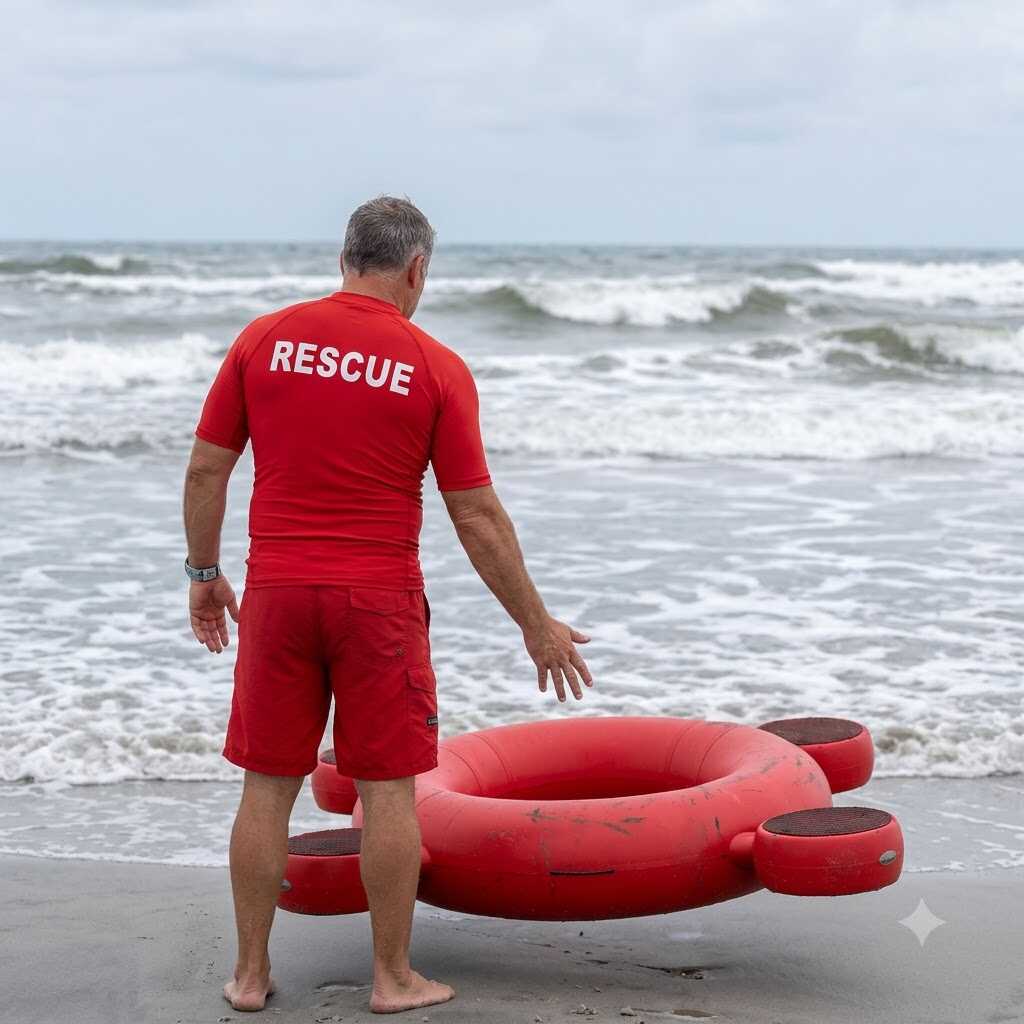
Unlike a traditional life preserver that must be thrown by hand or carried by a rescuer swimming out to the victim, the drone-based version can travel over long distances in a fraction of the time. It can cross rough terrain, choppy water, or crowded beaches far faster than a person on foot or even a rescue boat navigating through waves.
How the Concept Works
The general mechanism behind a life preserver with drone system can be broken down into a few key stages:
1. Detection and Alert
Some systems are paired with cameras, sensors, or lifeguard observation posts that detect a person in distress. In more advanced setups, AI-powered image recognition software scans the water for unusual movement patterns that suggest someone is struggling to stay afloat.
2. Rapid Deployment
Once an alert is triggered — either by a human operator or an automated detection system — the drone launches from a nearby station. Because drones can travel in a straight line through the air, they avoid obstacles like sandbars, crowds, or uneven coastline that would otherwise slow down a human rescuer.
3. Delivery of the Flotation Device
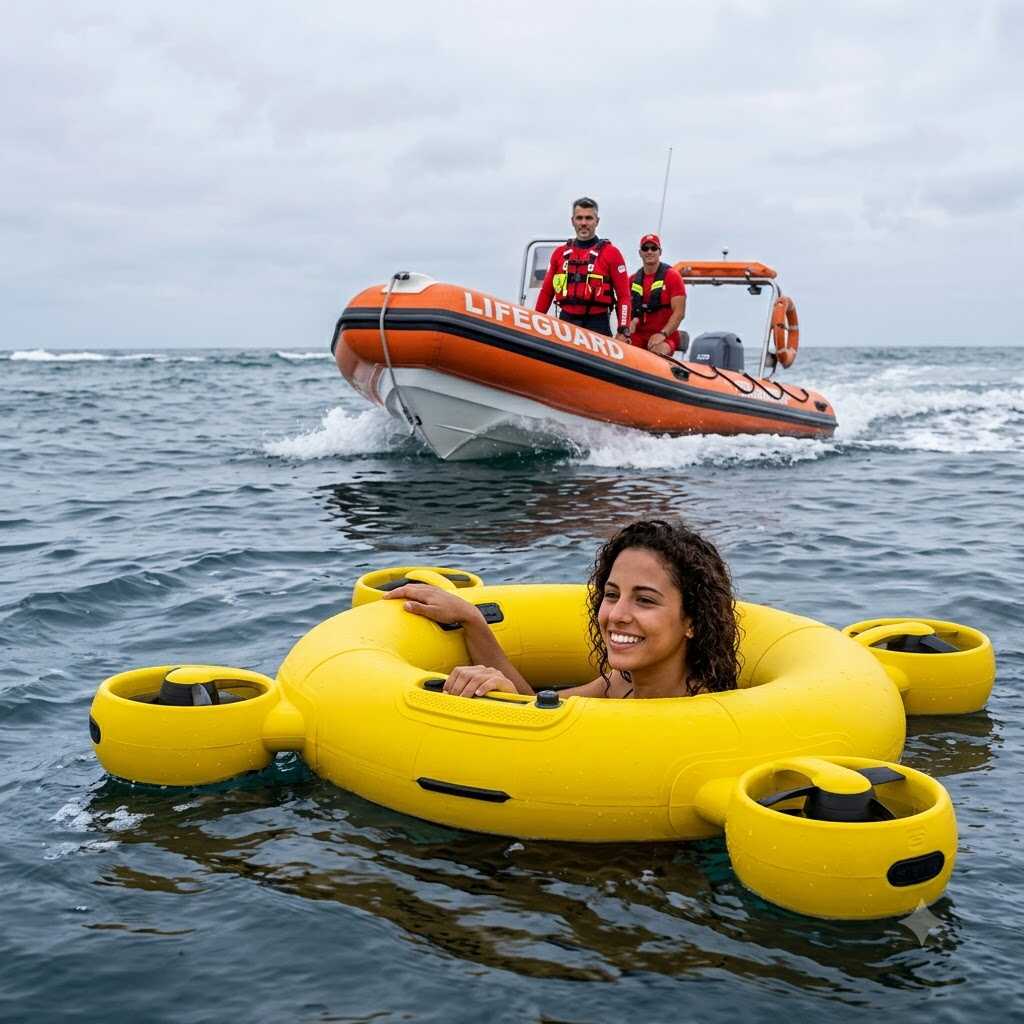
Upon reaching the victim, the drone releases the life preserver, which may inflate automatically upon contact with water. This gives the person something to hold onto and stay afloat while human rescuers make their way to the scene.
4. Human Rescue Follow-Up
It’s important to note that the drone itself typically doesn’t retrieve the person from the water. Instead, it acts as a critical bridge — buying time and increasing survival odds until lifeguards, first responders, or boats arrive to complete the rescue.
Why This Concept Is Gaining Attention
The idea of combining drones with life-saving equipment isn’t just a novelty — it addresses a very real problem. Drowning remains one of the leading causes of accidental death worldwide, and much of the tragedy stems from delayed response times. A drone can often reach a struggling swimmer in under a minute, compared to several minutes for a human rescuer swimming from shore.
Coastal cities, beach patrol units, and water sports organizations have shown growing interest in exploring these systems, particularly in areas with strong currents, large crowds, or limited lifeguard coverage. Universities and engineering students have also used the concept as a case study for combining robotics, aerodynamics, and emergency response planning.
Beyond rescue efficiency, the concept also opens up interesting discussions in engineering and design. How light can a flotation device be made while still providing sufficient buoyancy? How should a drone be weatherproofed to handle wind, rain, and salty ocean air? These are the kinds of questions engineers and hobbyist inventors are actively experimenting with.
Design Challenges Behind the Concept
Like any emerging technology, building a functional life preserver with drone system comes with its own set of engineering hurdles.
Weight and Balance
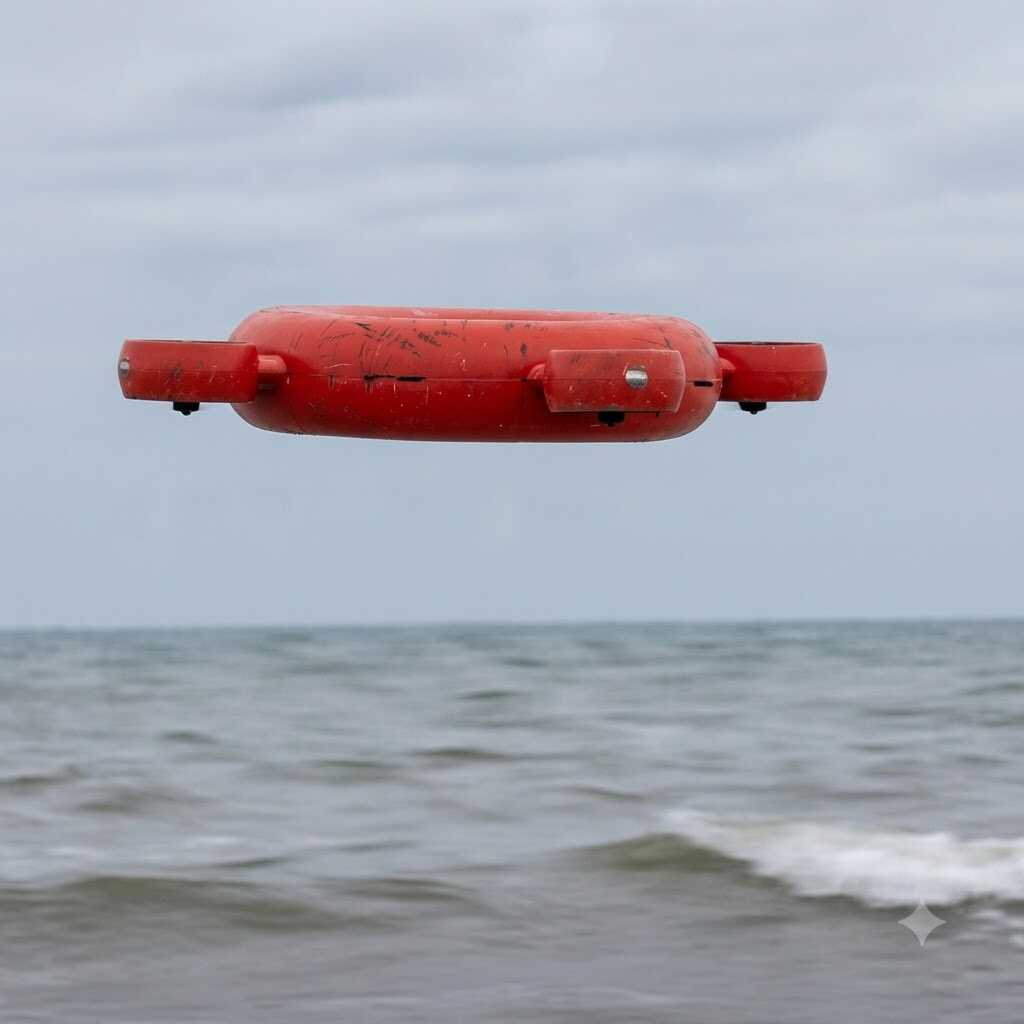
Drones have limited payload capacity, so the life preserver must be lightweight yet capable of expanding into a functional flotation device once deployed.
Weather Resistance
Rescue scenarios often happen during storms, high winds, or turbulent water — conditions that are especially challenging for small aerial vehicles to operate in safely.
Precision Drop Mechanisms
Delivering the device accurately to a person in moving water, especially amid waves or currents, requires precise control systems and sometimes computer-assisted targeting.
Battery Life and Range
Since drones rely on battery power, ensuring they have enough range to reach distant locations and return safely is a critical design factor.
Despite these challenges, ongoing advancements in drone technology — including improved battery efficiency, lightweight materials, and smarter navigation software — continue to push this concept closer to practical, real-world application.
The Bigger Picture: Drones in Emergency Response
The life preserver with drone concept is part of a much larger movement toward using drones in emergency and disaster response. From delivering medical supplies to hard-to-reach areas, to surveying wildfire zones, to assisting search-and-rescue teams in mountainous terrain, drones are steadily becoming valuable tools in situations where speed and accessibility matter most.
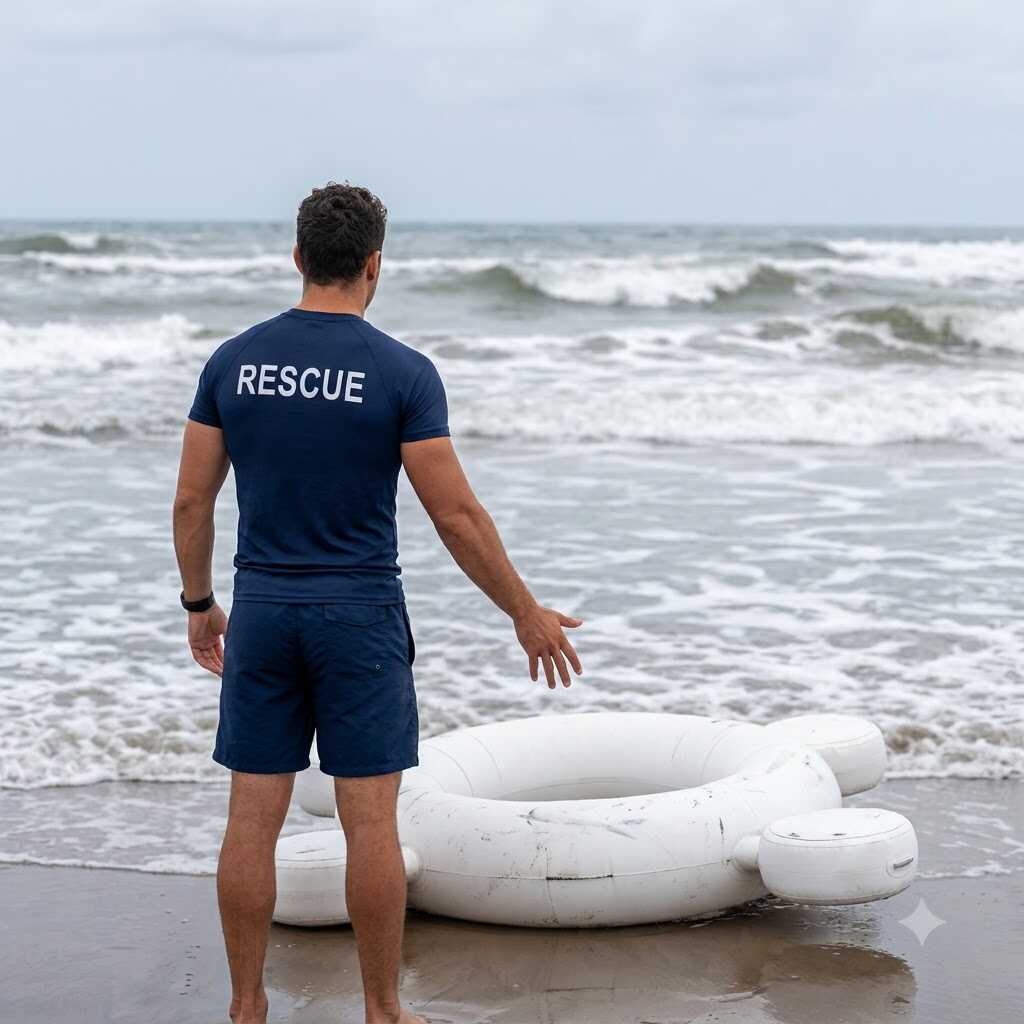
Water rescue is a particularly compelling use case because time is such a critical factor. Even a delay of one or two minutes can significantly affect survival outcomes. By reducing that response window, drone-assisted rescue systems have the potential to complement — not replace — traditional lifeguard and rescue teams, giving them an extra layer of speed and reach.
Looking Ahead
As drone technology continues to evolve, we can expect to see more experimentation with autonomous flight paths, AI-based victim detection, and improved flotation device designs tailored specifically for aerial deployment. Research institutions, robotics clubs, and safety organizations are likely to keep testing prototypes, refining what works and discarding what doesn’t.
It’s also worth noting that public safety agencies tend to adopt new technology cautiously, prioritizing thorough testing and regulatory approval before widespread implementation. This means that while the concept is promising, it may take time before drone-assisted life preservers become a common sight at beaches, lakes, and rivers.
Conclusion
The concept of a life preserver with drone represents an exciting intersection of engineering, robotics, and public safety innovation. By reducing the time it takes to reach someone in distress, this technology has the potential to make water environments safer for swimmers, boaters, and coastal communities.
While there are still technical challenges to overcome — from weather resistance to precision delivery — the underlying idea addresses a genuine and pressing need. As drone technology matures and becomes more accessible, concepts like this one may play an increasingly important role in shaping the future of emergency response, offering a faster, smarter way to help people when they need it most.