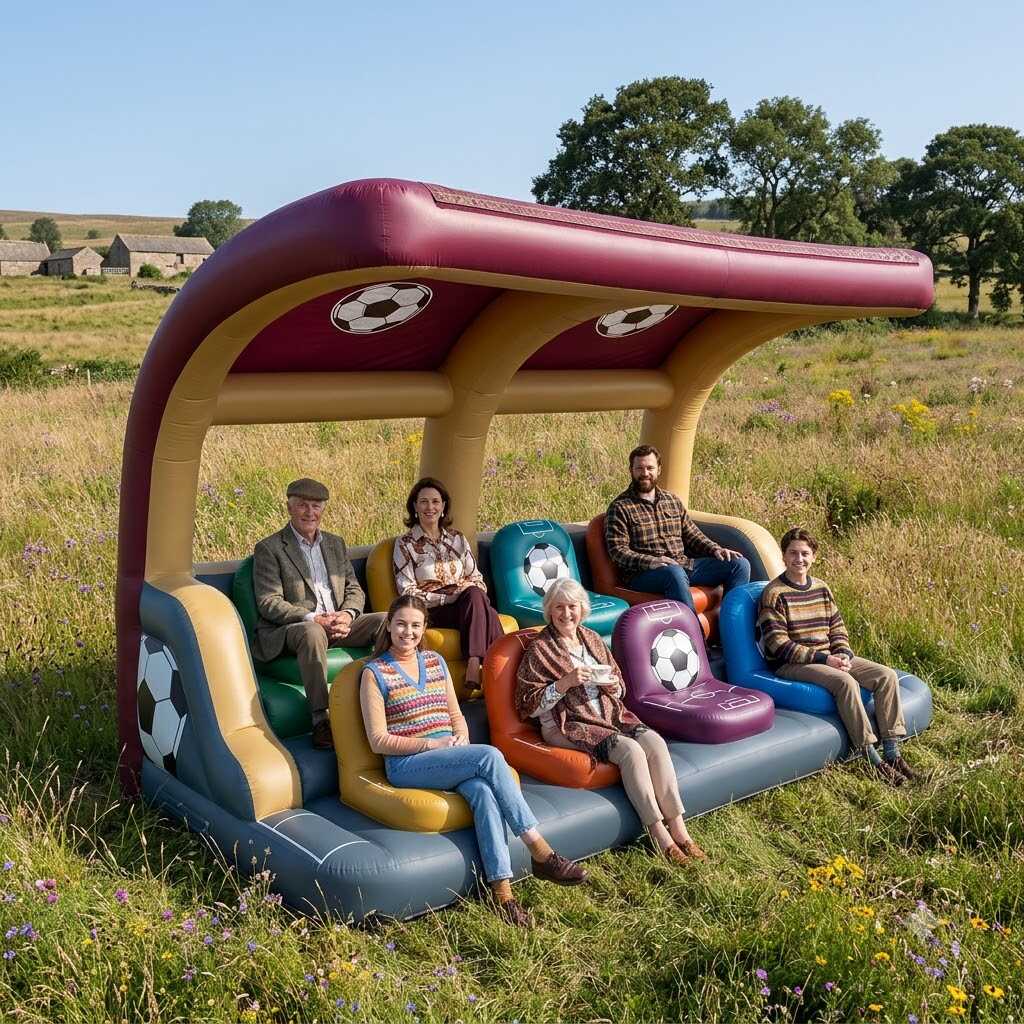
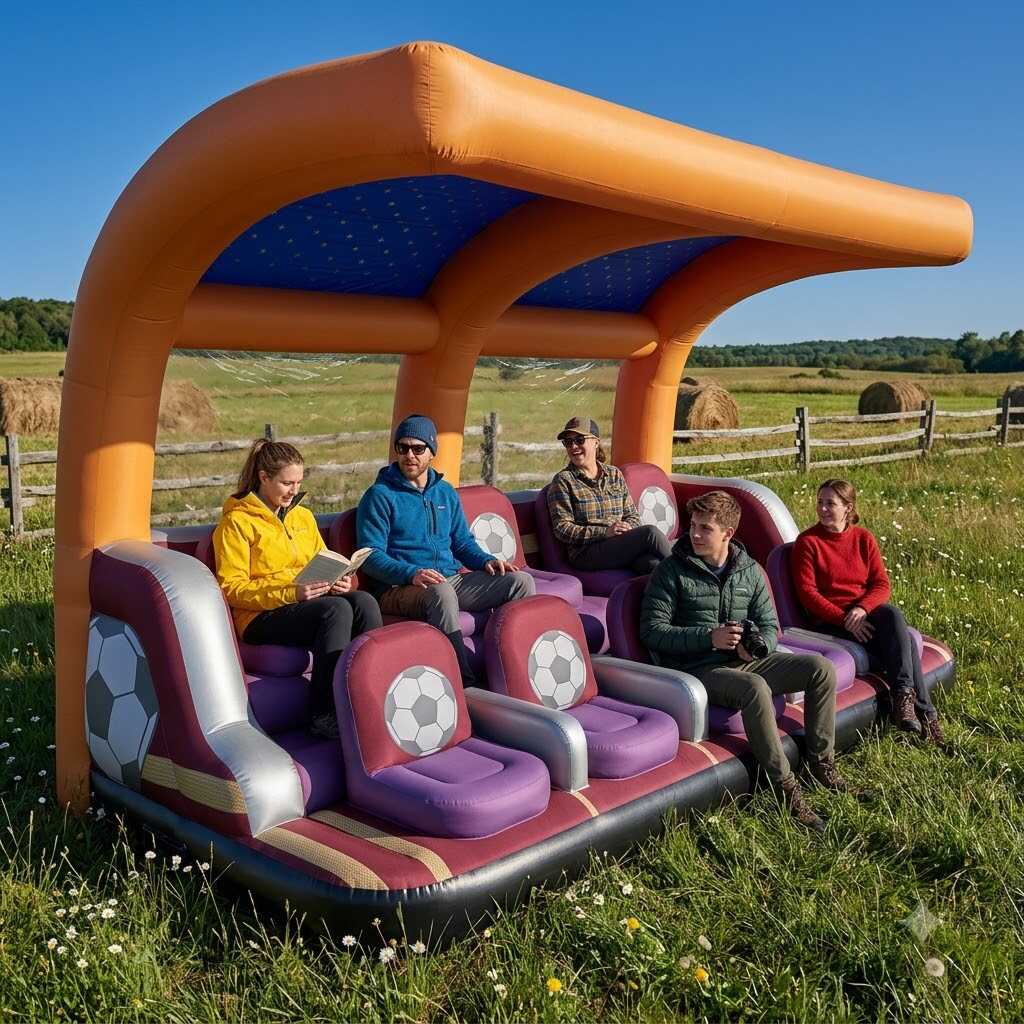
Walk past any small-town soccer pitch on a Saturday morning and you’ll usually see the same thing: a few metal benches, some scattered lawn chairs, and maybe a stretch of grass where parents just stand and hope for the best. It’s not exactly a stadium experience. But over the last couple of years, a strange little piece of sports infrastructure has been quietly solving this problem — Inflatable Soccer Bleachers.
At first glance, the idea sounds almost like a gimmick. Air-filled seating? For a soccer match? But once you look at how these structures are actually engineered, and why smaller clubs and municipalities are adopting them so quickly, it starts to make a lot more sense. The reason isn’t really about comfort or even cost. It’s about something most people never think about when they picture a stadium: Weight.
Why Weight Changes Everything
Traditional bleachers, even the smaller aluminum ones, are heavy. A modest ten-row structure can weigh several tons once you include the frame, footings, and safety railings. That weight has to go somewhere — usually into a poured concrete pad or a set of deep ground anchors. For a large stadium with a permanent budget and permanent land use rights, that’s a non-issue. For a small club renting a municipal field, a school using shared grounds, or a community league that only has the pitch for one season, it’s a massive obstacle.
This is where Inflatable Soccer Bleachers change the equation entirely. Because the core structure relies on high-pressure air chambers rather than steel trusses, the finished seating unit can weigh a fraction of its traditional counterpart. Ground pressure drops dramatically, which means no concrete footing, no permanent excavation, and in many cases, no special permitting at all. The bleacher essentially becomes furniture rather than infrastructure — something you place on a field, not something you build into it.
The Manufacturing Side Nobody Talks About
What’s genuinely interesting is how these structures are actually made, because it’s a world away from standard bleacher fabrication. Traditional stands start with steel cutting, welding, and powder coating. Inflatable seating starts with fabric engineering.
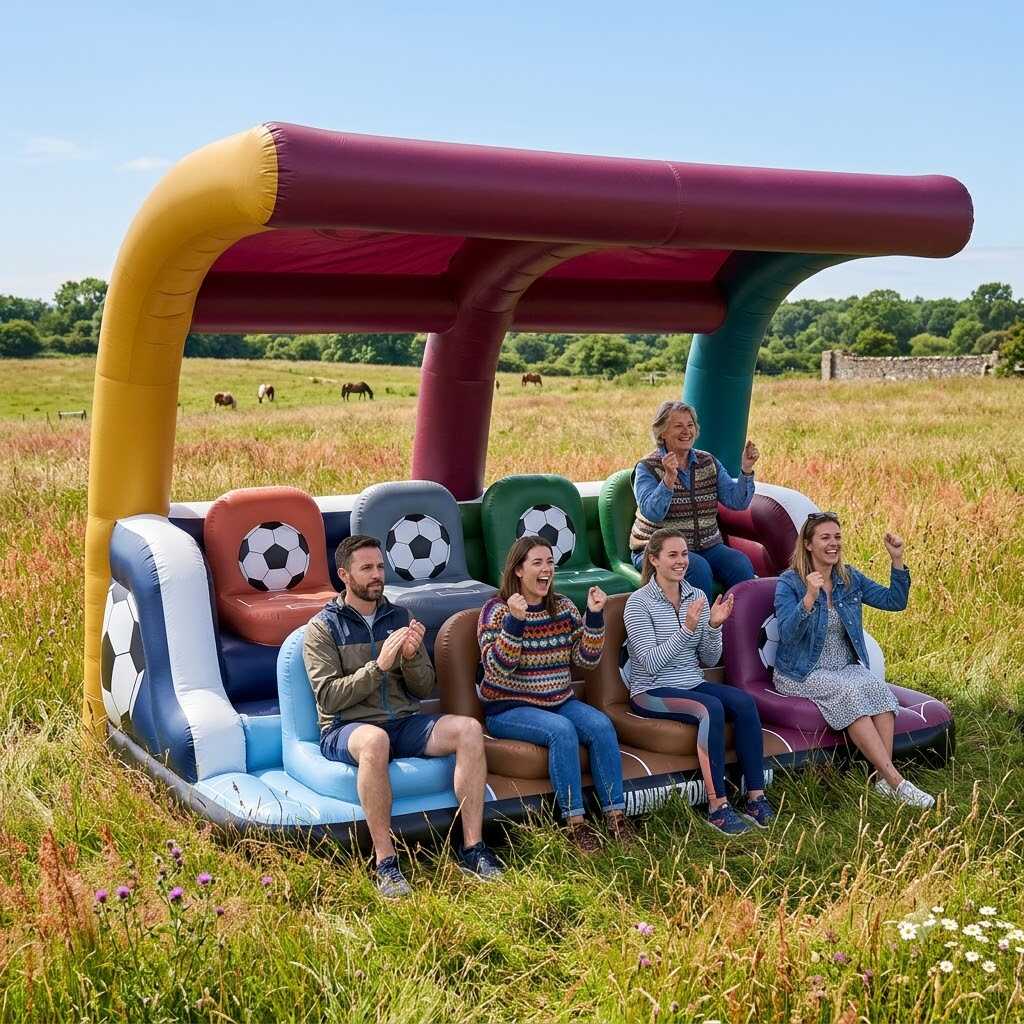
Most manufacturers use a drop-stitch material — the same core technology found in rigid paddleboards and inflatable dock platforms. Thousands of tiny polyester threads connect the top and bottom layers of the fabric, and when the chamber is inflated to a working pressure (usually somewhere between 8 and 12 PSI depending on the design), those threads pull taut and lock the structure into a rigid, load-bearing shape. It sounds almost too simple, but the tension created by drop-stitch construction is what allows a soft-sided object to support real human weight without flexing or collapsing.
Seams matter just as much as materials. A poorly welded seam is the single biggest failure point in any inflatable structure, so reputable fabricators use heat-welding rather than adhesive bonding wherever possible. Heat-welded seams fuse the material at a molecular level, which holds up far better under the repeated stress of people sitting, standing, and shifting weight during a match.
Designing for Real Match-Day Conditions
Anyone designing seating for an actual soccer environment has to think beyond just “will it hold weight.” A few design considerations come up again and again in the field:
- Step Rise and Depth — Inflatable steps need a slightly more generous depth than metal ones because the surface has a small amount of give. Designers typically add an extra inch or two of tread depth compared to a standard aluminum bleacher to keep footing secure.
- Surface Texture — A smooth PVC or TPU top layer would be dangerously slick within a single rainy match. Most current designs use a textured, UV-stable outer skin, sometimes with a light sand-grain finish, to keep grip consistent whether the surface is wet, dry, or covered in a bit of grass clipping.
- Multi-Chamber Redundancy — This might be the most important safety feature in the entire category. Instead of one giant air pocket, the structure is broken into multiple independent chambers. If one chamber is punctured, the seating doesn’t collapse; the surrounding chambers hold the shape while the damaged section simply deflates in place.
- UV and Ozone Resistance — Sitting outside for an entire season means constant sun exposure. The better manufacturers treat the outer fabric with UV inhibitors and ozone-resistant coatings so the material doesn’t turn brittle after a few months in direct sunlight.
The DIY Angle Small Clubs Are Exploring
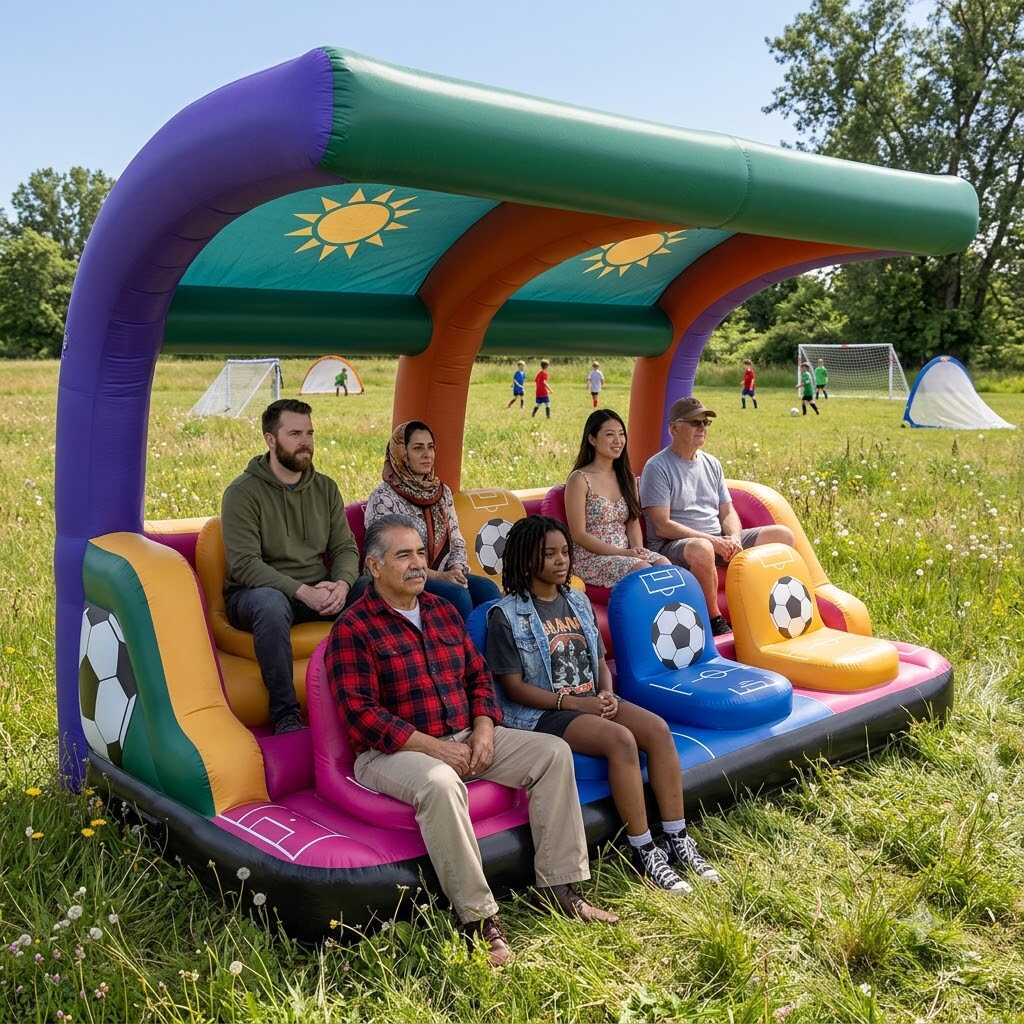
Because the core technology isn’t especially exotic, a small but growing number of hobbyists and semi-pro clubs have started experimenting with building their own modular inflatable seating sections, usually starting with pre-made drop-stitch panels rather than fabricating the fabric from scratch. The general process looks something like this:
- Panel Sourcing — Pre-cut drop-stitch panels are ordered in standard step and platform shapes.
- Frame Assembly — Panels are heat-welded or glued together (heat welding is strongly preferred for anything load-bearing) into a stepped module, usually three to five rows tall.
- Chamber Testing — Each finished module gets inflated to full pressure and left under a static load — often sandbags or water barrels — for 24 to 48 hours to check for slow leaks before it’s ever used by an actual person.
- Anchoring — Even though these structures are lightweight, most builders still tie the base down using low-profile ground stakes or ballast bags, just to prevent shifting in strong wind.
- Weatherproofing — A final UV-protective spray coating is applied to extend the lifespan of the outer fabric.
It’s not a weekend project by any means, but compared to pouring a concrete bleacher foundation, it’s remarkably achievable for a club with a bit of technical patience and the right tools.
Why This Matters Beyond Just Convenience
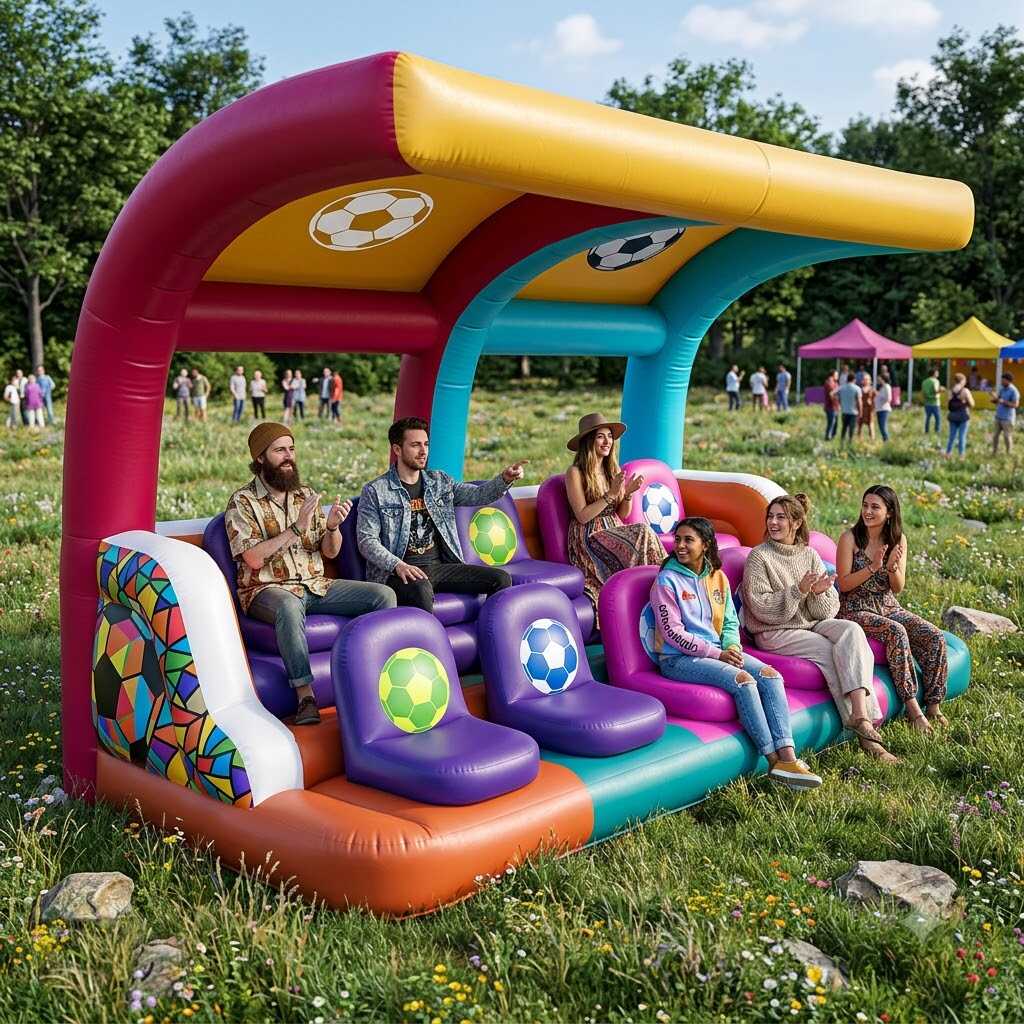
There’s a quieter, more human reason this technology has caught on so fast. Small stadiums often exist in a kind of infrastructure limbo — too small to justify permanent construction, but too popular with local communities to go without proper seating. Inflatable Soccer Bleachers fill that gap almost perfectly. They can be set up before a tournament, packed away for the off-season, and moved to a completely different field without needing a crew of engineers or a construction permit.
For groundskeepers, that flexibility means a field can serve multiple purposes throughout the year instead of being permanently dedicated to spectator seating. For clubs, it means expansion doesn’t require a capital campaign. And for the sport itself, it means more communities can offer something that actually resembles a real match-day atmosphere, even on a field that was mowed by volunteers that same morning.
Final Thoughts
What makes this whole category interesting isn’t the novelty of “inflatable” as a buzzword — it’s the underlying engineering logic. Drop-stitch fabric, multi-chamber safety design, heat-welded seams, and UV-stable materials have quietly turned air pressure into a legitimate structural building method. For small stadiums that need real seating without real permanence, that shift in manufacturing philosophy is exactly what makes the difference.
It’s a reminder that sometimes the biggest changes in sports infrastructure don’t come from bigger budgets or bigger stadiums — they come from rethinking the materials underneath the seats altogether.