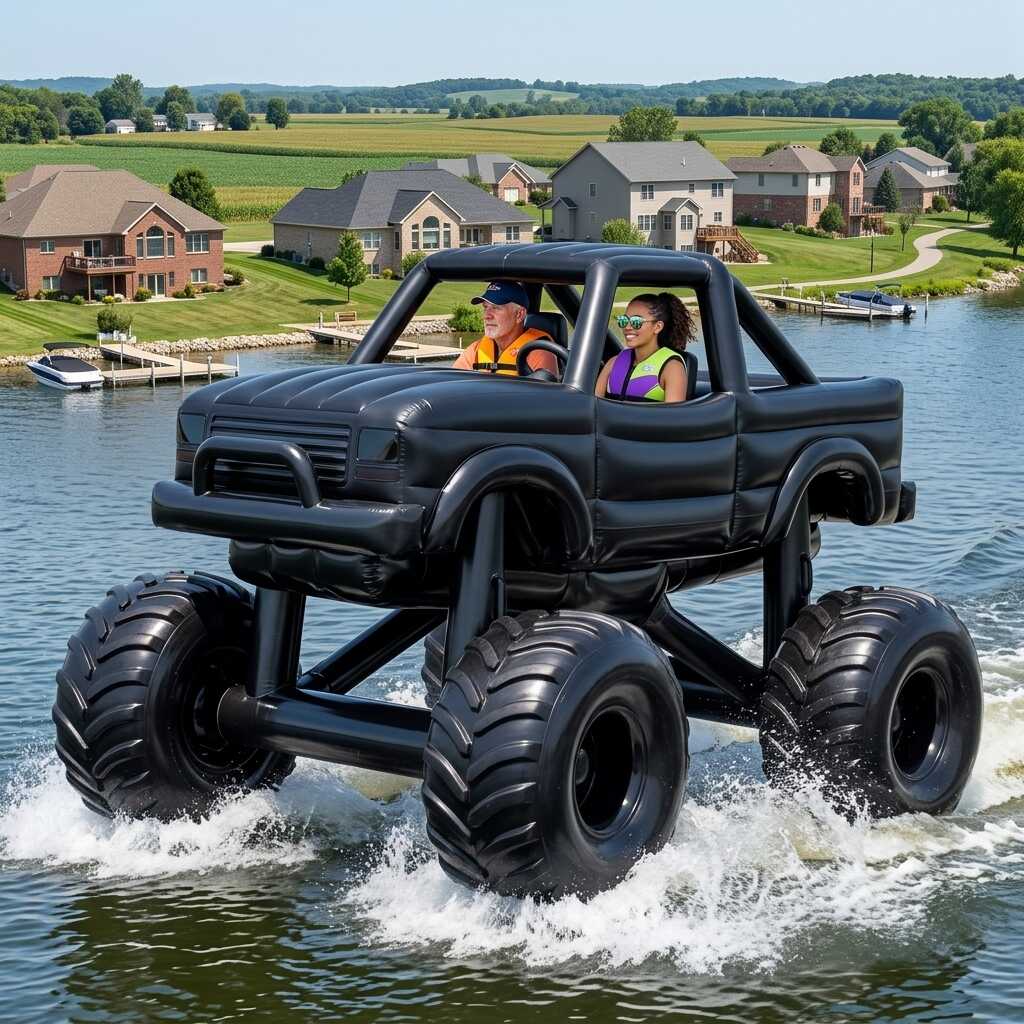
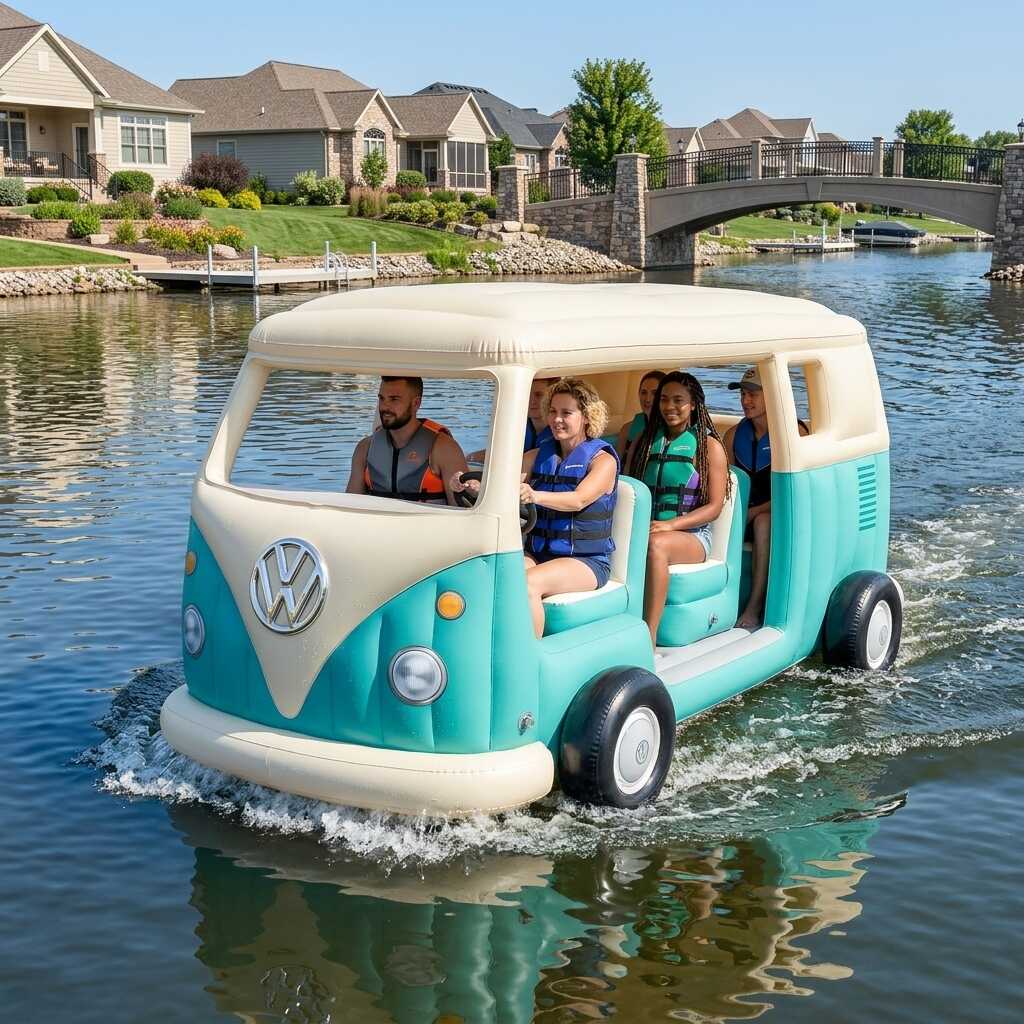
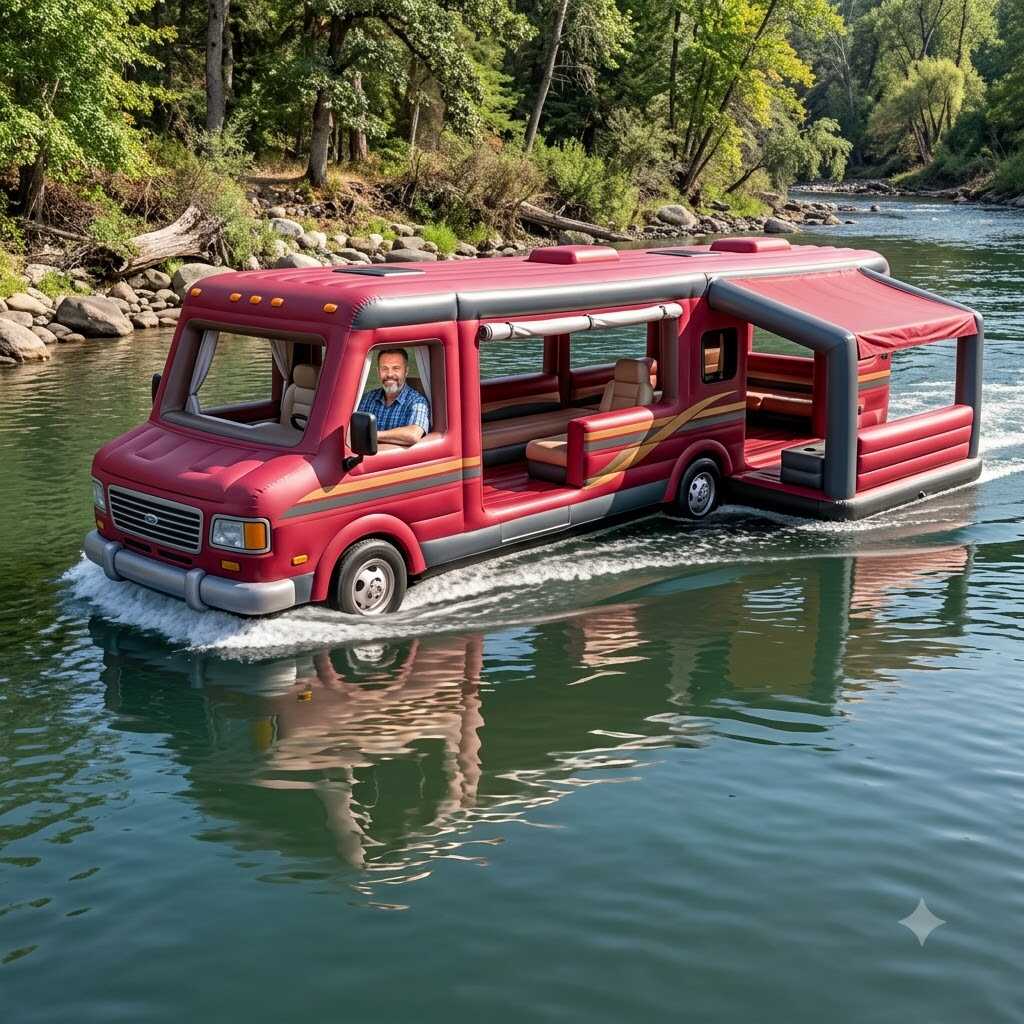
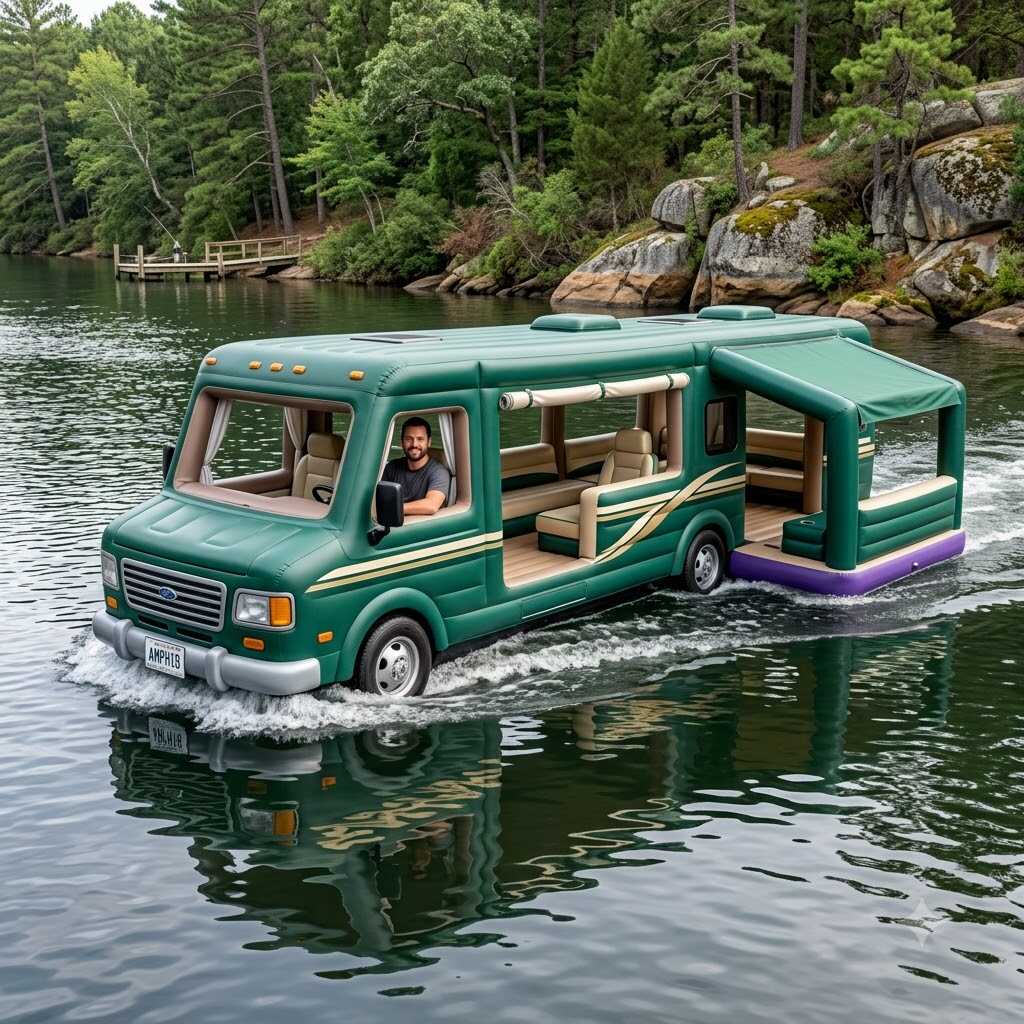
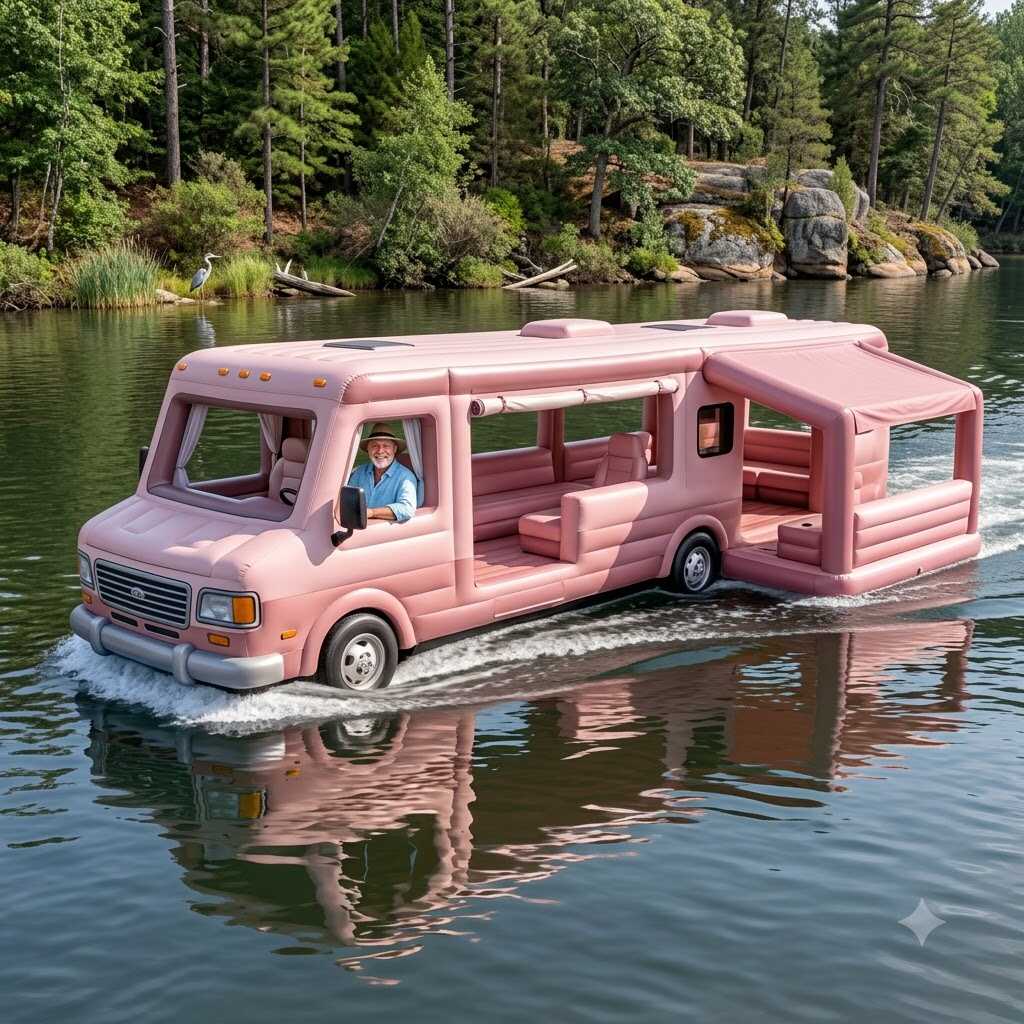
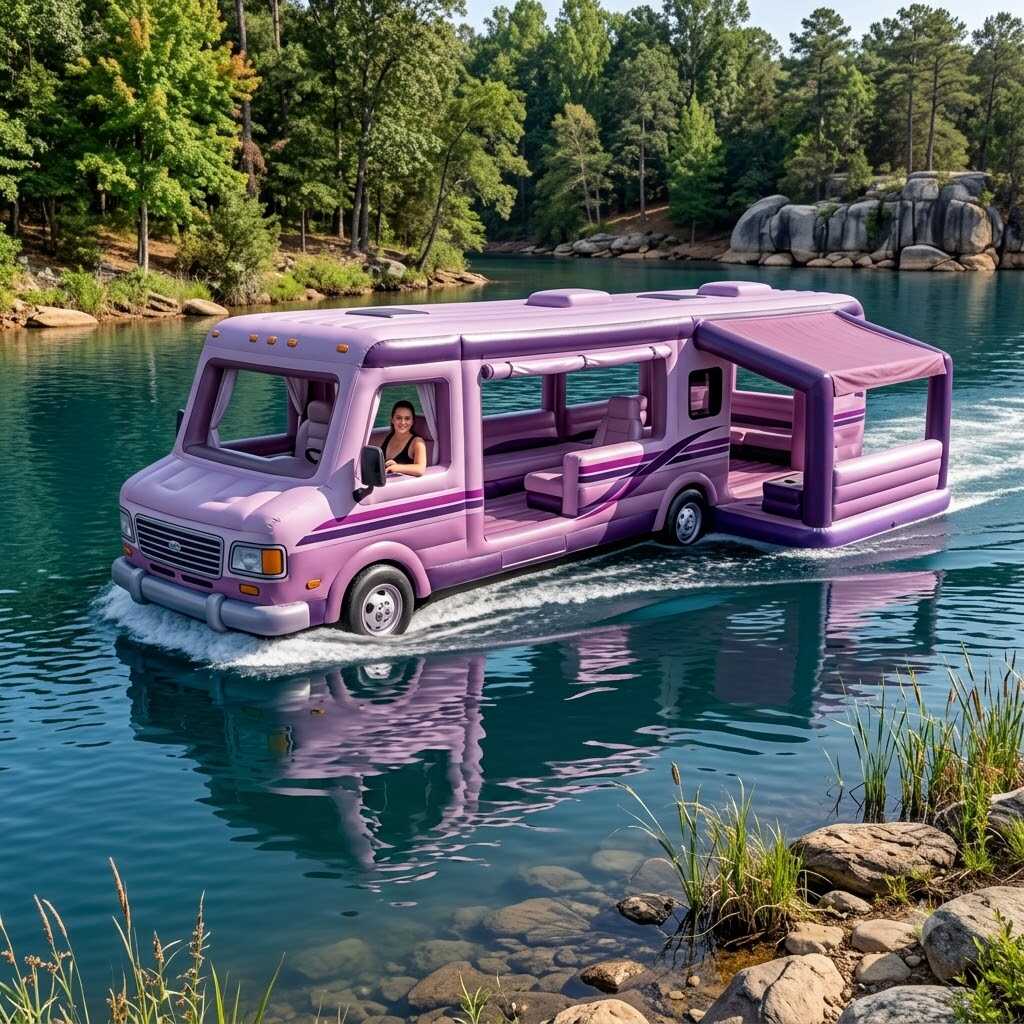
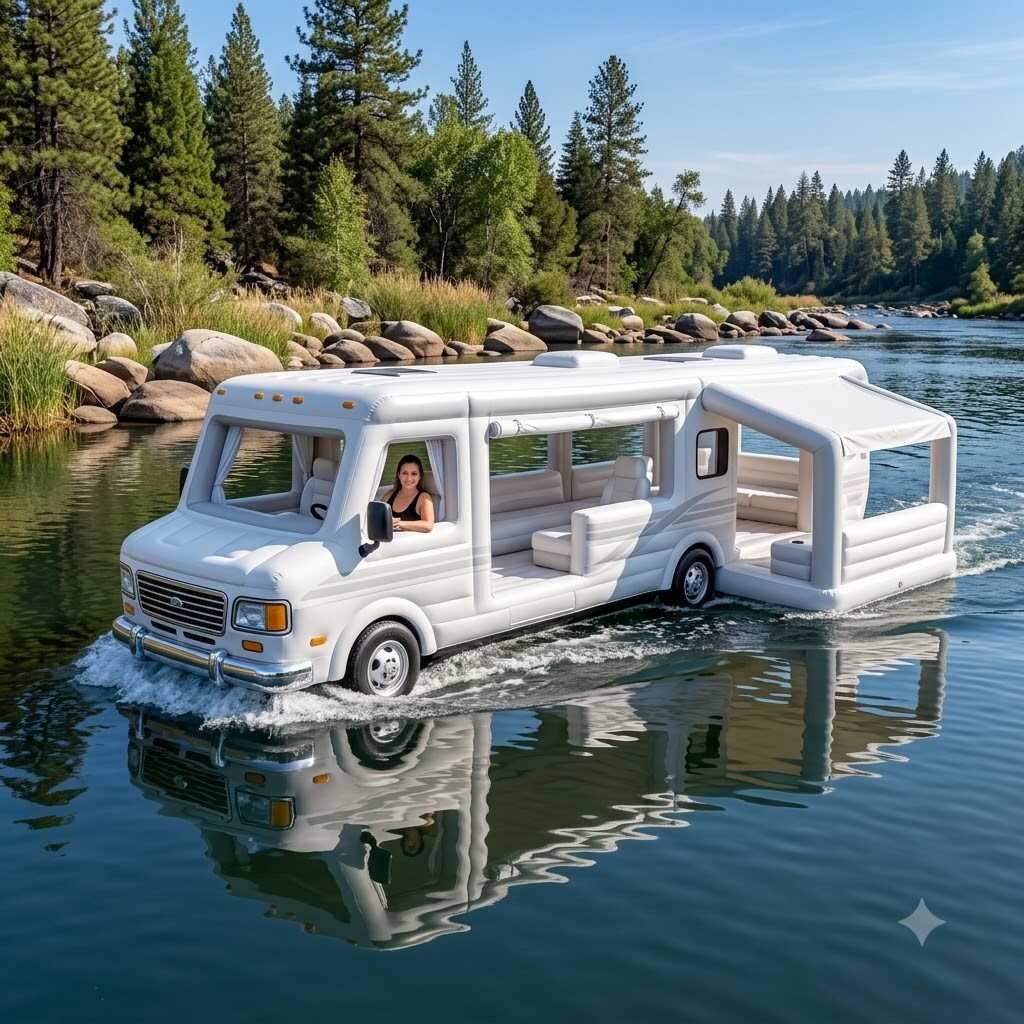
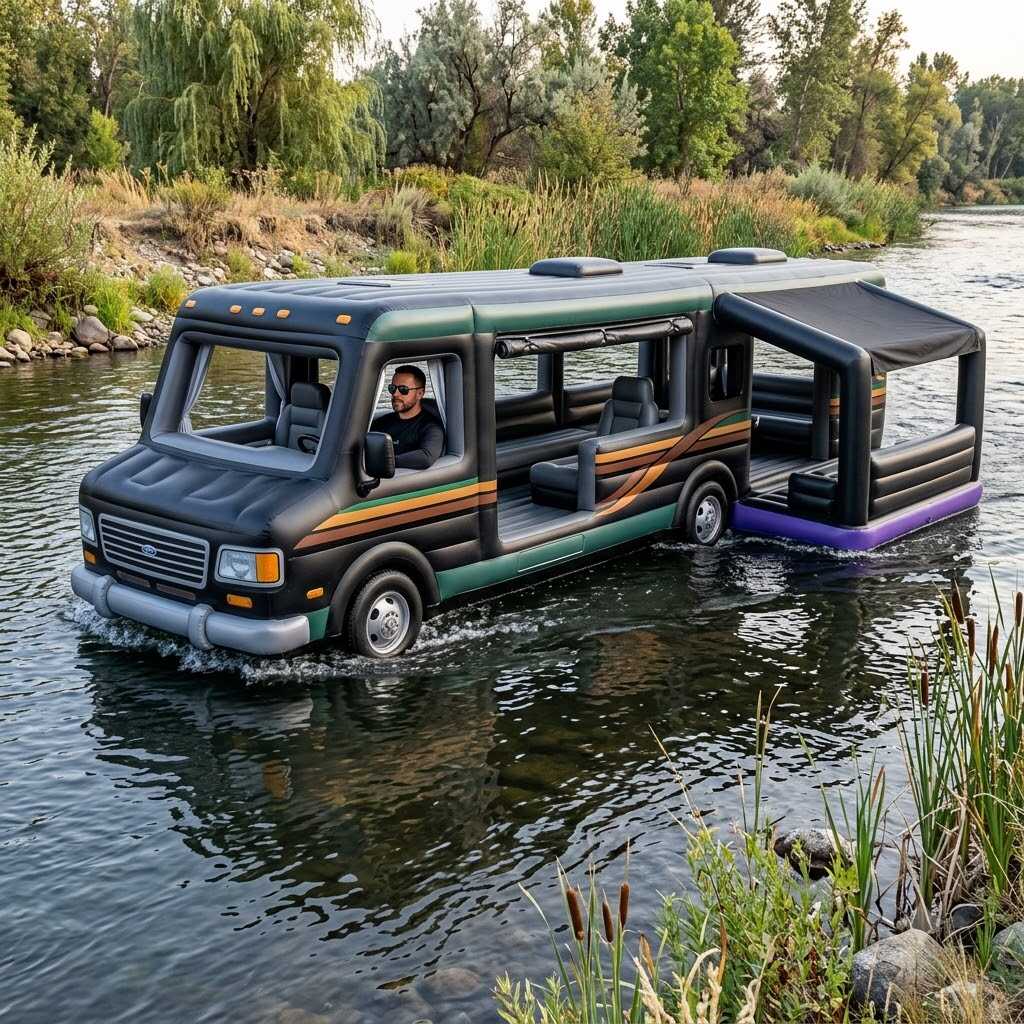
If you’ve scrolled through your phone at any point this summer, chances are you’ve seen it: a massive, cartoonish camper van bobbing in the middle of a lake, sunburned strangers sprawled across its “roof,” a tiny inflatable awning flapping in the breeze. The Giant Inflatable RV Lake Float has quietly become one of those objects that feels like it appeared out of nowhere and instantly took over every group chat and comment section. But behind the goofy grin painted on its windshield is a surprisingly intricate bit of engineering, and the story of how these things get made is a lot more interesting than the memes suggest.
Why This Particular Float Went Viral
Novelty pool floats aren’t new. Flamingos, unicorns, pizza slices — the category has been crowded for years. So why did a float shaped like a retro camper break through the noise? Part of it is nostalgia. The RV shape taps into a very specific, very Instagrammable fantasy: the open road, national parks, road-trip freedom, all shrunk down into something you can drag into a lake. Part of it is scale. Most viral floats stop at “big enough for two people.” This one is built to hold a small crowd, which turns it into a social object rather than a solo sunbathing accessory. And part of it is simply the silhouette — the boxy camper shape reads instantly in a thumbnail, even before you zoom in, which matters enormously in a feed where you have half a second to earn a scroll-stop.
There’s also a timing element. Lake culture, van life aesthetics, and “retro summer” content have all been trending simultaneously, and this float sits at the exact intersection of all three. Designers who study novelty inflatables will tell you that the products which break out of their niche usually do so because they borrow visual language from somewhere else entirely — in this case, vintage camper design.
What Actually Goes Into Designing One
Before any of these things touch water, they start as a flat sketch. Product designers working in the inflatable space usually begin with a 2D pattern — essentially a blueprint that maps out every panel, seam, and chamber the finished float will need. Because the RV shape has hard edges, tiny windows, and a rounded roofline, this is far trickier than sketching a simple ring float. Every curve has to be broken down into flat, weldable pieces of fabric that, once inflated, will trick the eye into seeing a smooth 3D vehicle rather than a lumpy patchwork.
Designers typically use specialized 3D modeling software to simulate air pressure before a single seam is cut. This step matters because inflatable structures behave unpredictably — a shape that looks perfect on paper can balloon strangely or sag in odd places once it’s actually filled with air. By running digital pressure tests first, manufacturers catch these issues early and avoid wasting expensive material on a prototype that won’t hold its form.
The Material Question
Almost every large-format lake float, including this one, is built from PVC or a similar heavy-gauge vinyl. The thickness matters enormously. Go too thin, and the float won’t survive a summer of sunscreen, dock scrapes, and overenthusiastic cannonballs. Go too thick, and the whole thing becomes stiff, heavy, and difficult to fold — a real problem when you’re trying to fit a camper-shaped float into a storage bag the size of a duffel.
Manufacturers generally land somewhere in the 0.4mm to 0.9mm range for the outer skin, layering it over a network of internal air chambers rather than relying on a single giant air pocket. This multi-chamber approach is a DESIGN safeguard as much as a comfort feature: if one chamber gets punctured, the float doesn’t sink or collapse entirely. It just sags a little in that one section, buying you enough time to paddle back to shore instead of treading water next to a shredded vinyl camper van.
UV resistance is another quiet battle happening in the material science behind these products. Bright colors fade fast under direct sun, and the paint used for details like headlights, curtains, and the little “license plate” graphic has to be baked into the vinyl itself rather than simply printed on top, or it peels within a few outings.
Welding, Not Sewing
Here’s something that surprises a lot of people: these floats aren’t sewn together. Fabric seams would leak air almost immediately under water pressure. Instead, manufacturers use a process called RF welding (radio frequency welding), which uses high-frequency electromagnetic energy to fuse layers of vinyl at a molecular level, creating a seam that’s actually stronger than the surrounding material.
For a shape as complex as an RV — with its boxy cab, rounded roof, tiny wheel wells, and flat “windshield” panel — this welding process happens across dozens of individual seams, each one requiring a custom-shaped welding die. It’s part of why detailed novelty floats take noticeably longer to produce than a basic ring or lounger. Every curve of the camper shape is its own small manufacturing challenge.
The DIY Crowd Is Getting Involved Too
Unsurprisingly, the internet being the internet, a growing number of hobbyists have started experimenting with DIY inflatable projects inspired by products like this one. Small-scale makers are using heat-sealing tools designed for home use to attempt their own mini versions, working with vinyl sheeting ordered in bulk and cheap RF-adjacent sealing irons. The results are rarely as polished as the factory-made originals — home welding tends to produce visibly uneven seams — but the DIY inflatable community has turned this into its own niche, with tutorials focused on pattern-drafting, panel layout, and air-chamber planning for anyone who wants to try building oversized novelty floats from scratch.
This DIY angle has actually fed back into the float’s popularity. Watching someone attempt to replicate the camper shape from a flat roll of vinyl makes the finished, factory-perfect version look even more impressive by comparison, which keeps the content cycle going.
Why It’ll Probably Stick Around
Trends built purely on a color or a slogan tend to fade fast. But this one is anchored to something more durable: a genuinely clever piece of shape engineering wrapped in a nostalgic, highly photogenic silhouette. As long as lake season keeps producing content, and as long as manufacturers keep refining the welding and material techniques that make oversized novelty shapes possible, expect to see more attempts at chasing this same formula — different vehicles, different retro objects, same basic engineering playbook underneath.
Final Thoughts
What started as a goofy lake accessory has turned into a small case study in product design, material science, and manufacturing precision. The next time one floats past in your feed, it’s worth remembering that somewhere behind that cartoon windshield is a pattern-drafting process, a pressure simulation, and a small army of custom RF welds holding the whole ridiculous, wonderful shape together.