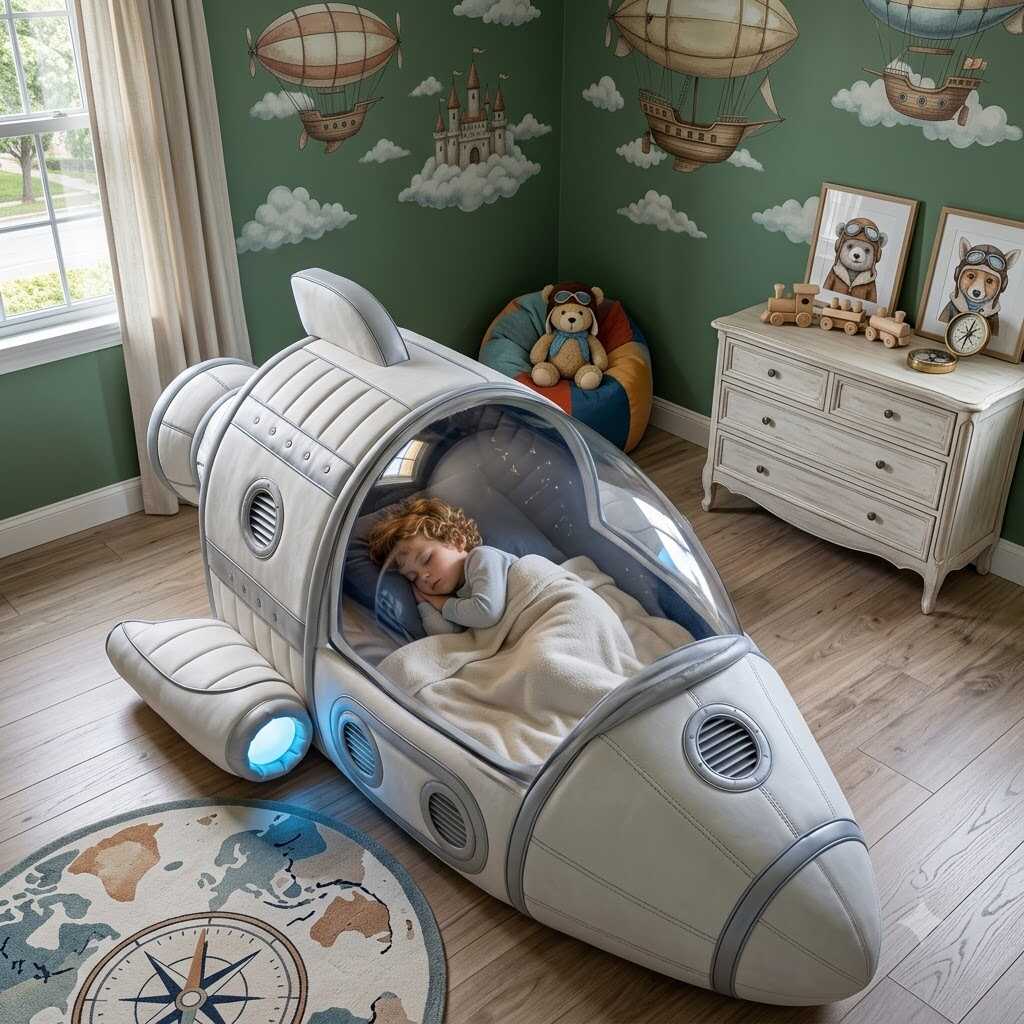
I still remember the first time I watched an inflatable spaceship bed take shape on a factory floor. What looked like a flat pile of shiny fabric turned, in about ninety seconds, into a glowing cockpit big enough for a kid to climb inside and pretend they were drifting past Saturn. It’s a strange kind of magic when you see it up close, but there’s nothing magical about how it gets made. Behind every inflatable spaceship bed is a surprisingly technical mix of chemistry, mold engineering, and stress testing that most people never think about. If you’ve ever wondered how a bag of air becomes a sturdy, kid-safe piece of furniture shaped like a rocket cabin, this is the breakdown.
Starting With the Right Material
Everything about an inflatable spaceship bed begins with fabric selection, and this step matters more than people assume. Most manufacturers reach for PVC or TPU-coated polyester, both of which are prized for their balance of flexibility and puncture resistance. PVC tends to be the more budget-friendly option, offering good air retention and a glossy finish that takes printed designs well — useful for those star fields and planet graphics that make the bed look like an actual spacecraft. TPU, on the other hand, costs more but flexes better in cold temperatures and resists cracking over time, which is why premium designs often lean toward it.
Thickness is measured in denier or gauge, and for a children’s bed frame that needs to hold weight overnight, manufacturers typically avoid anything too thin. A flimsy material might inflate fine on day one but develop stress fractures within weeks of regular use. That’s why reputable production lines run incoming fabric rolls through tear-strength and abrasion tests before a single panel gets cut.
Seams are the other half of the material equation. Two techniques dominate here: heat welding and RF (radio frequency) welding. Heat welding presses layers together under controlled temperature until the polymers fuse, while RF welding uses electromagnetic energy to bond seams from the inside out, creating a tighter, more airtight joint. For a product like an Inflatable Spaceship Bed, where curved cockpit walls and rounded headboards are common, RF welding is often preferred because it handles complex shapes more precisely than a straight heat press.
Designing the Mold and Pattern
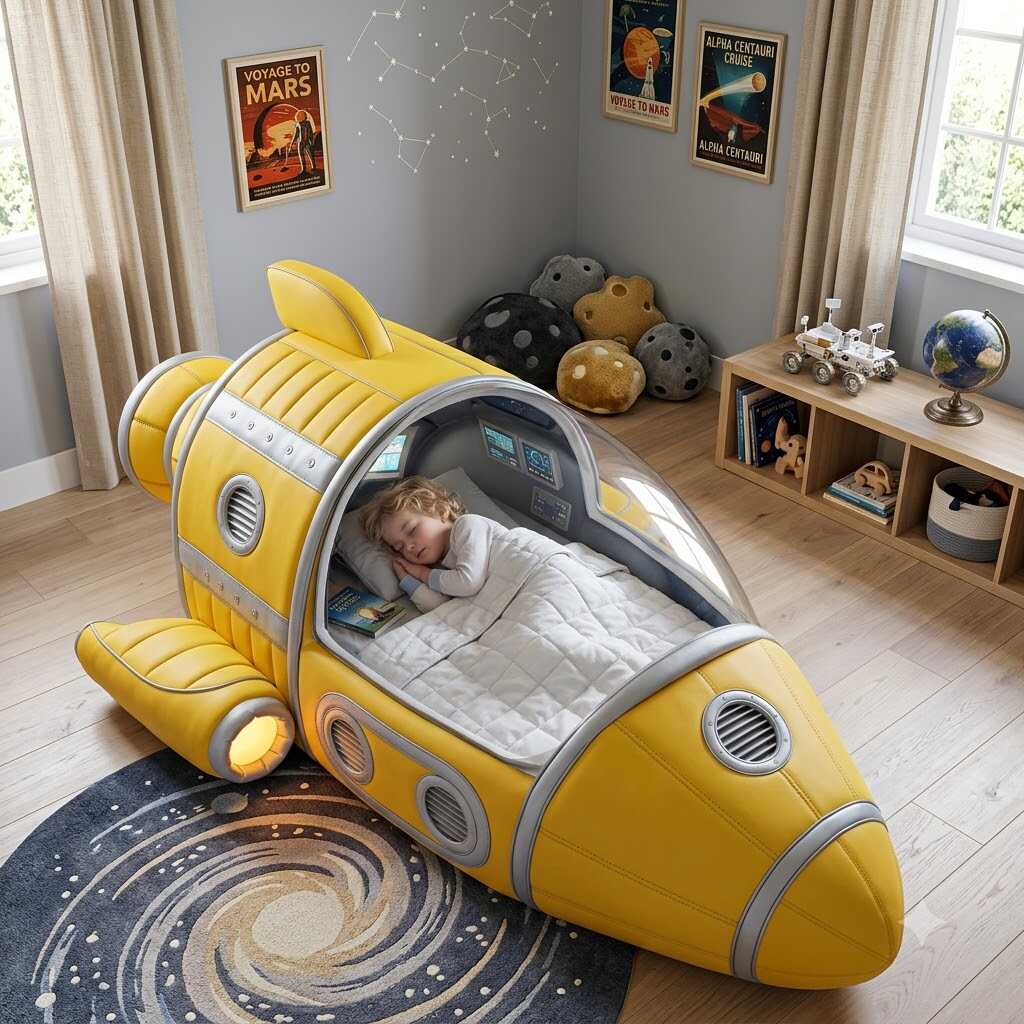
Before any fabric gets welded, there’s a design phase that resembles something closer to automotive engineering than furniture making. Designers build a 3D digital model of the spaceship shape first, mapping out the cockpit walls, the raised nose cone, and the little control-panel bumps that give it that sci-fi look. This model then gets flattened into 2D patterns, a process called “paneling,” where curved surfaces are broken into flat pieces that can be cut from rolled fabric and welded back together into a 3D form once inflated.
This is trickier than it sounds. A poorly paneled design might inflate lopsided, with wrinkles pulling in odd directions or a nose cone that leans instead of standing upright. Skilled pattern makers use specialized software, often the same kind used for inflatable boats and event tents, to simulate how the panels will behave once air pressure pushes them outward. Some manufacturers build a MOLD or jig purely to help align panels during welding, ensuring every unit comes out with consistent proportions instead of slightly different “personalities” from batch to batch.
Once the pattern is finalized, a sample or prototype gets built by hand. This first unit is inflated, examined for symmetry, and often left running for days to check how it holds air under normal room conditions before mass production even starts.
Reinforcement and Internal Structure
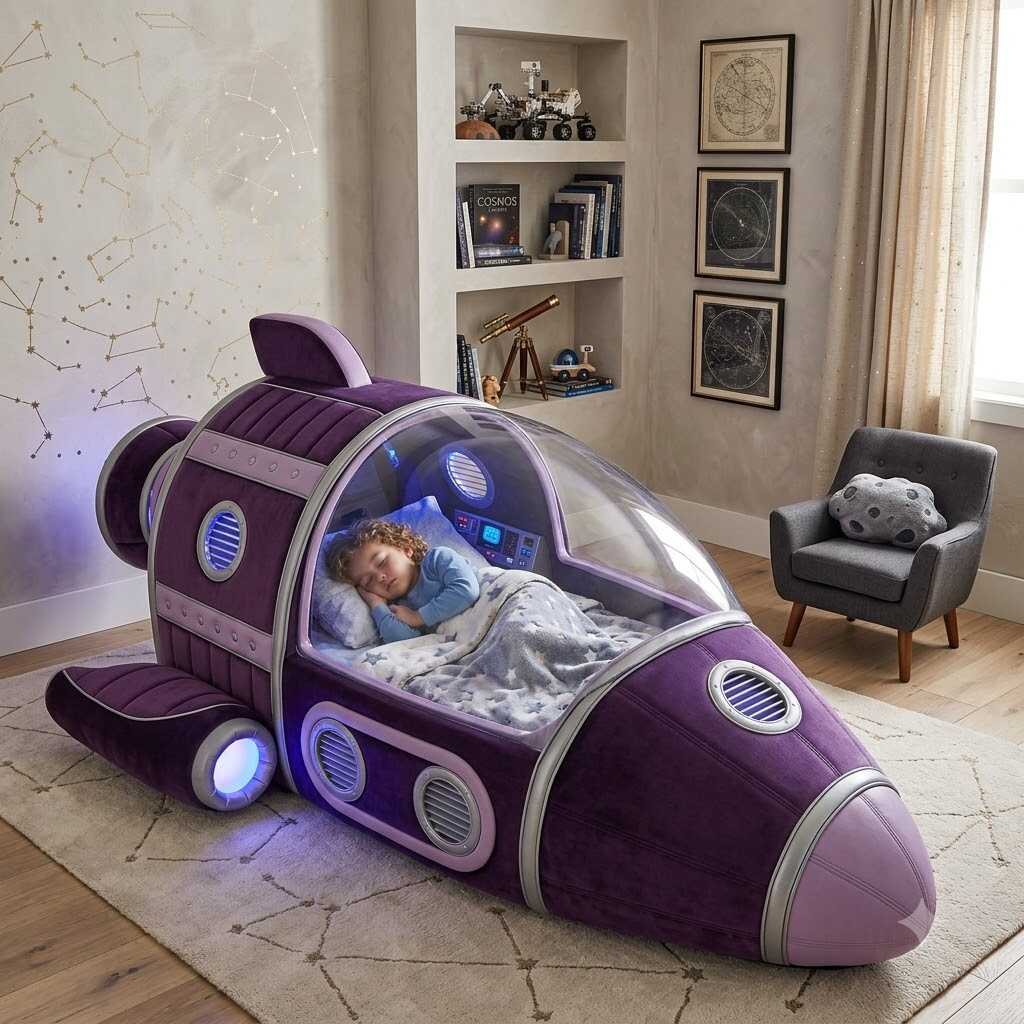
A bed frame has to support far more consistent pressure than, say, a pool float, so internal reinforcement becomes critical. Manufacturers commonly add drop-stitch construction to the base platform — thousands of tiny threads connecting the top and bottom layers of fabric internally, which allows the mattress-support section to stay rigid and flat rather than ballooning into a rounded shape. This is the same technology used in high-pressure paddleboards, adapted here for stability under a sleeping child’s weight.
The cockpit walls and headboard sections, by contrast, use simpler single-chamber construction since they don’t need to bear body weight directly. Baffles, which are internal fabric walls stitched or welded between the outer layers, help maintain the rounded shape of curved sections like the ship’s nose without letting them balloon unevenly.
Valve placement is another design decision that affects both manufacturing and daily use. Most inflatable spaceship beds use a dual-valve system: one larger valve for fast inflation and deflation, and a smaller one-way valve for topping off air pressure without letting it all escape while you adjust the pump.
Testing for Safety and Durability
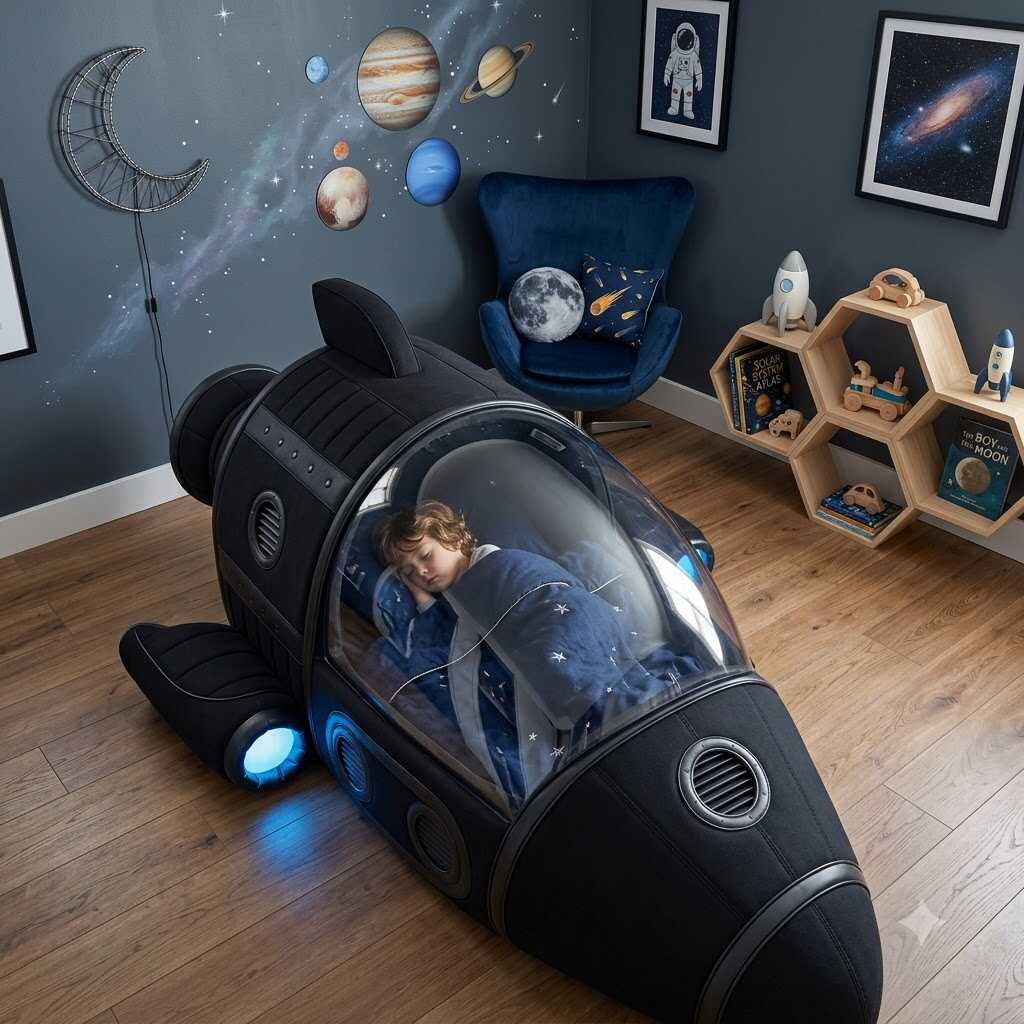
This is where the process gets genuinely rigorous. Before a design reaches consumers, it typically goes through several rounds of testing:
- Load testing, where weighted sandbags or hydraulic presses simulate a sleeping body over extended periods to check for slow leaks or seam separation.
- Puncture and abrasion testing, using standardized tools that repeatedly rub or press sharp points against the fabric to measure resistance.
- Air retention testing, where a fully inflated unit sits for 24 to 72 hours in a controlled environment while engineers measure pressure loss.
- Temperature cycling, which exposes the material to both heat and cold to check whether seams or plastic components become brittle or overly soft.
- Flame-resistance testing, required in many regions for children’s furniture, ensuring the PVC or TPU coating meets safety codes for slow burn rates.
Manufacturers producing for regulated markets also need to meet standards like ASTM F963 in the United States or EN71 in Europe, both of which set specific benchmarks for children’s product safety, including small-part hazards and material toxicity. Surface coatings are checked for phthalate content and other restricted chemicals, since kids’ bedding items get close, prolonged skin contact.
Quality control doesn’t stop at the prototype stage either. Random units from each production batch are often pulled and re-tested to catch any drift in seam quality or material thickness that might creep in during mass manufacturing.
Final Assembly and Finishing Touches
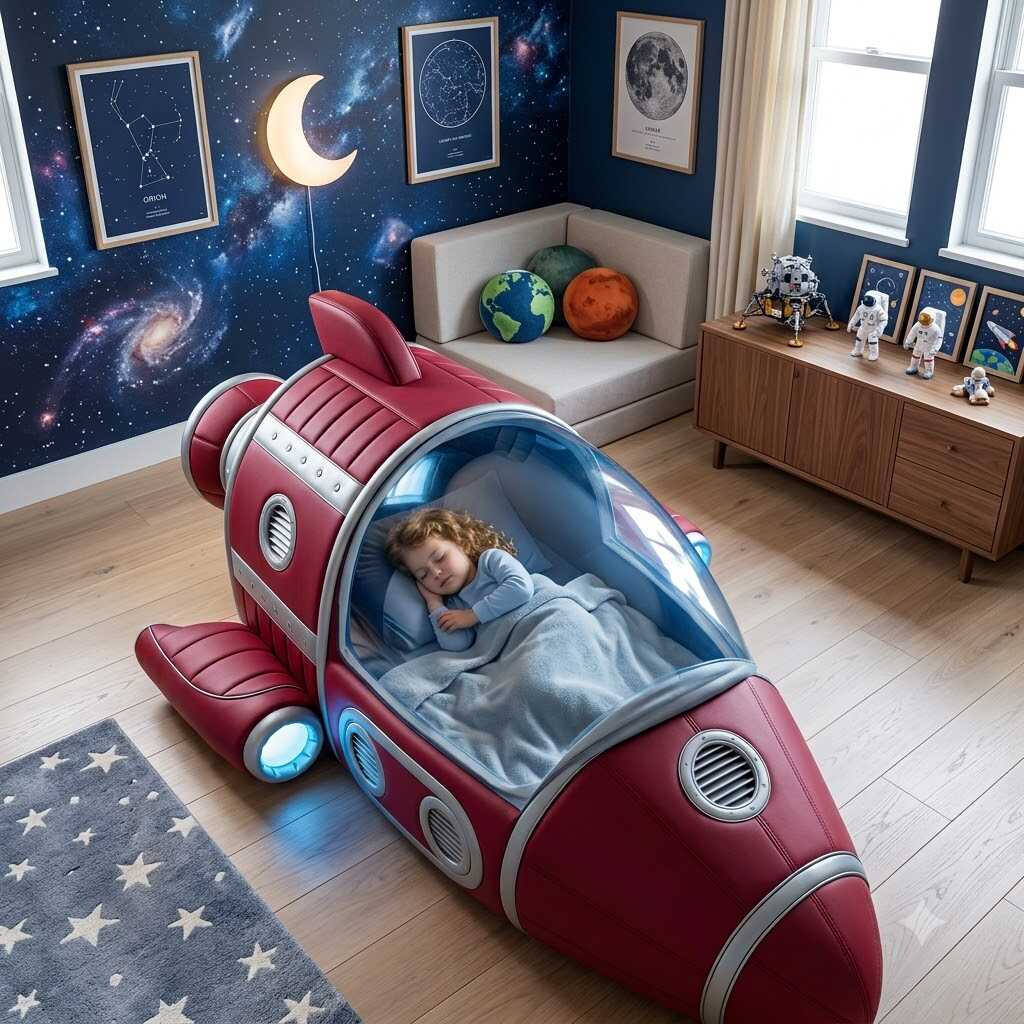
Once a design passes testing, production shifts into batch manufacturing. Panels are cut using either die-cutting machines or computer-guided cutting blades for higher precision, then welded in sequence: base first, followed by side walls, then the decorative elements like painted portholes, LED light pockets, or glow-in-the-dark star decals. Many spaceship-themed beds include a small pump port integrated directly into the design, along with a repair patch kit, since even durable materials can occasionally develop a pinhole leak from normal wear.
The finishing stage also includes printing. High-resolution digital printing directly onto the PVC or TPU surface has mostly replaced older screen-printing methods, allowing for sharper graphics like control panels, warning labels styled like a NASA dashboard, or a starry night backdrop that wraps around the cockpit walls.
Wrapping It Up
An inflatable spaceship bed might look like a simple novelty item, but the manufacturing process behind it involves real engineering discipline — from material chemistry and seam welding techniques to drop-stitch reinforcement and multi-stage safety testing. What starts as a flat sheet of coated fabric becomes, through careful paneling and quality control, a structure that can hold a sleeping child steady night after night. Next time you see one fully inflated with its glowing control panel and rounded cockpit walls, it’s worth remembering just how much precision went into making that shape hold its form.