The landscape of recreational watercraft is undergoing a creative shift, where functional utility intersects with highly imaginative thematic concepts. At the forefront of this evolution is the inflatable pirate ship electric boat, a specialized vessel designed specifically for freshwater environments like lakes. Moving away from the utilitarian shapes of standard dinghies, kayaks, or rigid speedboats, this unique craft blends historic nautical folklore with modern inflatable architecture.
The primary design objective of this boat is to translate the complex, rugged silhouette of a 17th-century pirate galleon into a soft, buoyant, and mechanically stable structure. It serves as a visual centerpiece on open water, balancing theatrical styling with the geometric constraints of a low-speed electric vessel. This article explores the specific design inspirations, structural aesthetics, color theory, and material engineering that define the physical presence of the inflatable pirate ship electric boat during lake operations.
Structural Silhouette and Historic Design Inspiration
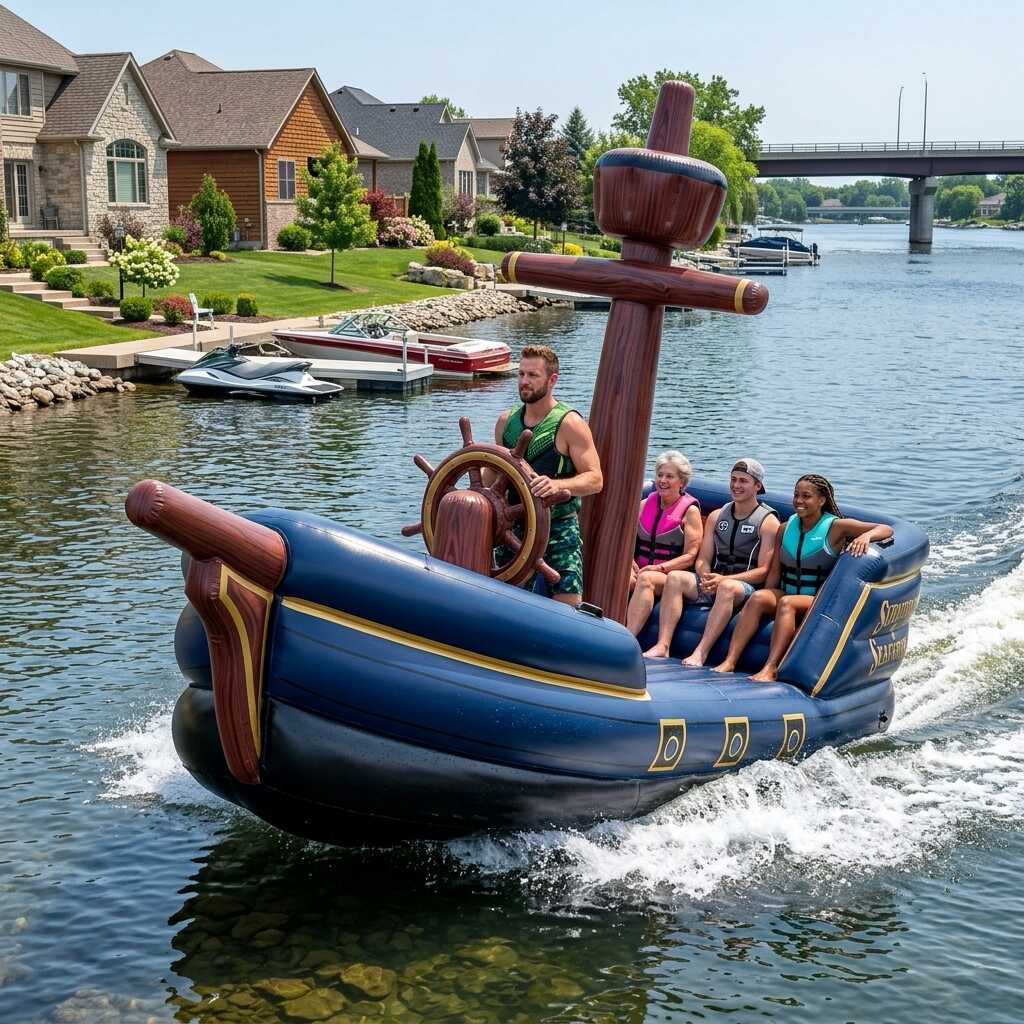
The primary challenge in creating an inflatable pirate ship electric boat lies in mimicking historic woodworking with pressurized PVC or drop-stitch fabric walls. The design draws heavy inspiration from classic European galleons, scaling down their defining features into a proportional, functional lake craft.
The High-Wall Hull and Elevated Sterncastle
Traditional pirate ships were known for their towering sterns and deep hulls. To replicate this aesthetic while ensuring aerodynamic stability against lake breezes, the boat utilizes a multi-tiered inflatable chamber system.
-
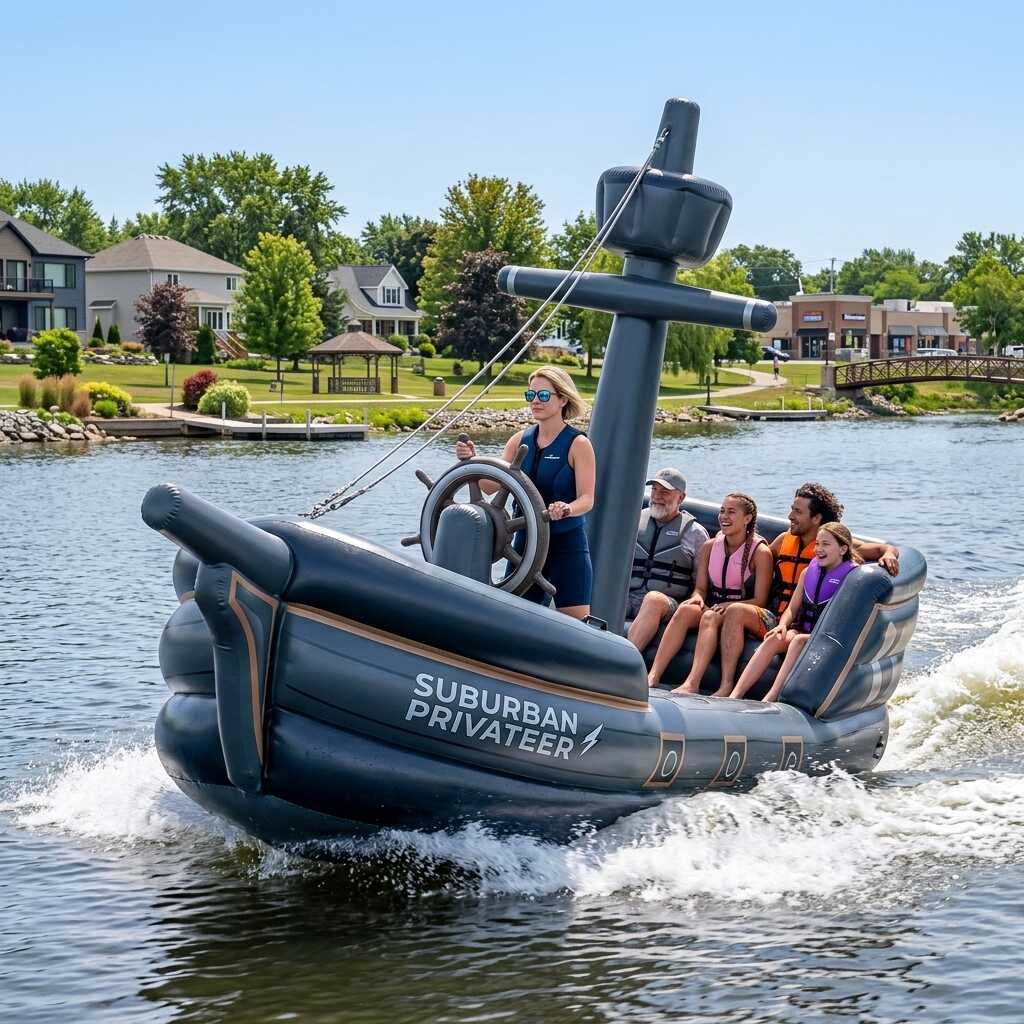
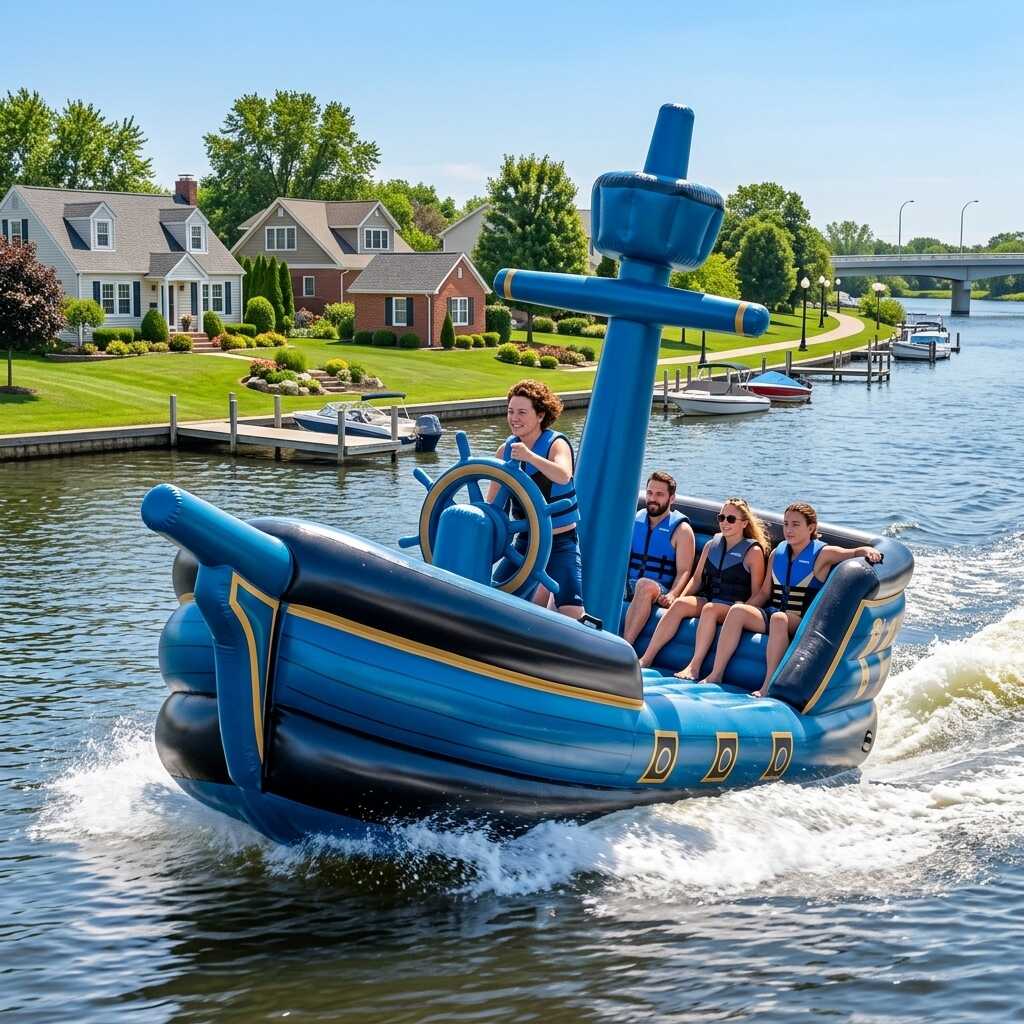
The Bow: The front of the vessel curves upward into a distinct, reinforced prow, mimicking the aggressive forward stance of an authentic warship.
-
The Gunwales: The side walls are intentionally thick and elevated, providing a secure, enclosed perimeter that replicates the high bulwarks of a historic ship.
-
The Sterncastle: At the rear, the inflatable chambers are stacked vertically to create an elevated platform. This tiered design creates the classic silhouette of a captain’s quarters without causing the boat to sit too heavy in the water.
Mast Integration and Rigging Architecture
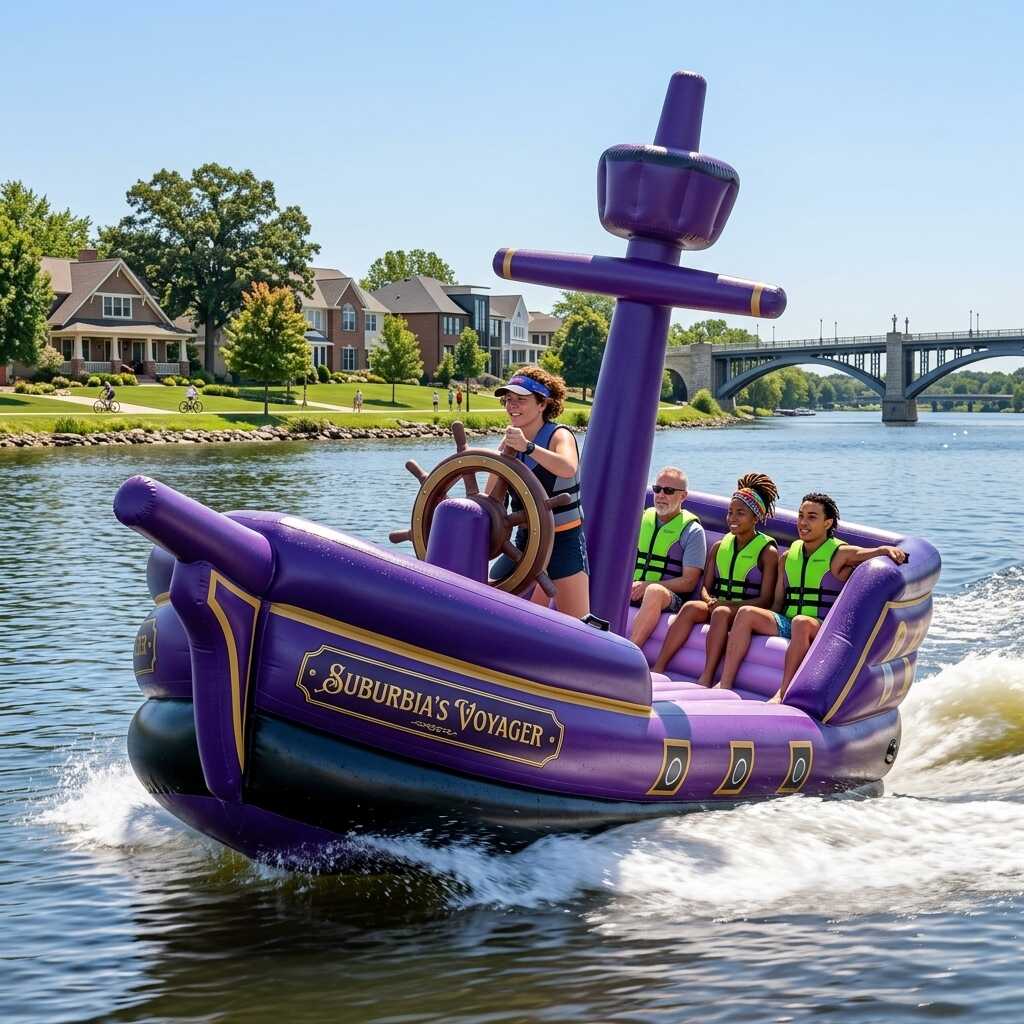
A pirate ship is unrecognizable without its rigging. In this electric boat design, the central mast is engineered as a rigid, high-pressure inflatable column or a lightweight modular composite pole anchored deep into the floor chamber. From this mast, specialized crossbeams extend to support fixed fabric sails. Because the vessel is driven by an electric motor rather than wind, the sails are purely architectural features, designed to remain open and aesthetically crisp without capturing enough wind to destabilize the vessel. Faux rigging lines made of braided, UV-resistant nylon run from the mast to the gunwales, completing the complex webbed look of an authentic tall ship.
Material Selection and Textural Engineering
Translating a wooden vessel into an inflatable medium requires advanced materials that resist punctures, retain complex shapes, and mimic natural textures. The fabric selection dictates how the boat holds its form and handles the constant exposure to fresh water and sunlight.
High-Density Drop-Stitch and Heavy-Duty PVC
To achieve the flat surfaces necessary for the deck and specific hull panels, the design incorporates drop-stitch technology. This material consists of tens of thousands of polyester threads connecting two parallel layers of fabric, allowing it to be inflated to high pressures (up to 15 PSI) until it becomes as rigid as a solid wooden plank.
[Top PVC Layer]
  |||||||||||  <- Vertical Drop-Stitch Threads (Creates flat, rigid surfaces)
[Bottom PVC Layer]
The outer skin utilizes commercial-grade, multi-layer Polyvinyl Chloride (PVC) with a denier count ranging from 1,000 to 1,200. This heavy-duty fabric provides the structural rigidity needed to maintain the sharp angles of the stern and prow, preventing the boat from wrinkling or sagging under the weight of its thematic components.
Matte Finishes and Synthetic Texture Overlays
Standard inflatables often feature a high-gloss, reflective surface that breaks the historic illusion. The inflatable pirate ship electric boat utilizes a specialized matte-finished PVC. Advanced digital textile printing techniques are applied directly to the fabric layers before assembly, embedding deep grain textures into the polymer. This creates a visual texture that mimics weathered oak, cedar, or pine, absorbing light rather than reflecting it, which enhances the realism of the vessel when viewed across a lake.

Color Theory and Thematic Visual Elements
The color palette and surface detailing are critical in transforming an ordinary inflatable craft into a convincing replica of a historic pirate vessel. The design relies on deep, earthy tones contrasted with bold, symbolic accents.
Earthy Wood Tones and Weathered Grays
The foundational color scheme of the hull consists of dark browns, charcoals, and deep sepia tones. Rather than a single solid color, the panels utilize a gradient design that mimics aging wood exposed to salt and fresh water.
-
Lower Hull: A dark, near-black charcoal color covers the waterline, grounding the vessel visually.
-
Upper Bulwarks: Rich chestnut and mahogany tones define the upper chambers, contrasted by lighter tan shades along the interior decking to simulate sun-bleached wood planks.
High-Contrast Accents and Insignia
To break up the dark wood tones, the vessel incorporates strategic pops of color inspired by privateer flags and royal navy trim:
-
The Sails: The sails feature deep black or stark white fabrics, often printed with clean, bold geometric patterns such as horizontal crimson stripes or a stylized skull-and-crossbones insignia.
-
The Trim: Faux gold leaf or deep yellow accent lines run horizontally along the gunwales, replicating the decorative molding found on wealthy merchant vessels captured by pirates.
Integration of Propulsion and Nautical Detailing
The mechanical core of the boat—the electric motor and control system—must be seamlessly integrated into the inflatable chassis so that modern technology does not overshadow the historical design inspiration.
Concealed Motor Mounts and Transom Design
The electric outboard motor is positioned at the stern, attached to a reinforced marine-grade plywood or carbon-fiber transom. This transom is bonded directly into the rear inflatable chambers, completely framed by the elevated sterncastle. From a distance, the motor is partially obscured by the hull’s historic contours, allowing the boat to maintain its classic lines while gliding silently through lake waters.
       [Elevated Sterncastle]
        /                 \
       /   [Hidden Motor]  \  <- Recessed into the rear silhouette
======[     [Transom]       ]======
Inflatable Cannon Ports and Fixtures
Along the port and starboard sides, the multi-chamber tubes are molded with circular, recessed black pockets that mimic traditional cannon ports. These elements add depth to the flat sides of the hull. Additionally, the bow features an integrated, reinforced inflatable bowsprit—the spar extending forward from the vessel’s prow—which visually elongates the boat and provides a mounting point for a themed figurehead.
Conclusion: A Harmonious Blend of Era and Engineering
The inflatable pirate ship electric boat represents a sophisticated exercise in thematic industrial design. By extracting the iconic visual markers of historical tall ships—the high-walled sterncastle, the aggressive bowsprit, and the complex mast architecture—and applying them to modern drop-stitch and high-denier PVC materials, designers have created a highly distinct watercraft.
The careful execution of matte textures, weathered wood color palettes, and hidden mechanical integrations ensures that the vessel remains visually faithful to its historic inspiration. Ultimately, the design transforms standard lake recreation into a striking visual display, proving that inflatable watercraft can achieve a high level of aesthetic complexity without sacrificing structural integrity.