CAMPING IN A GIANT INFLATABLE HOUSE: THE ULTIMATE GLAMPING EXPERIENCE?
Picture this: you are deep in the heart of a whispering pine forest, miles away from the nearest paved road. The stars are burning bright holes into a pitch-black sky, and the crisp night air smells intensely of damp earth and woodsmoke. Normally, this level of rugged isolation means squeezing yourself into a nylon bivy sack, shivering on a thin foam pad, and praying that the zipper holds against a midnight downpour.
But not tonight. Tonight, you are lounging on a plush queen-sized memory foam mattress, surrounded by panoramic transparent walls that offer an unobstructed, 360-degree view of the cosmos. Warm LED string lights cast a golden glow across a spacious, multi-room interior featuring an armchair, a writing desk, and enough headroom to stand up and stretch without touching the ceiling. You are camping in a giant inflatable house, and the boundaries of outdoor recreation have just been permanently redrawn.
Over the last decade, the concept of getting outside has undergone a massive cultural evolution. We transitioned from traditional, no-frills wilderness survival to “glamping”—a blend of glamour and camping that brought yurts, safari tents, and treehouses into the mainstream. Yet, as glamping destinations became more permanent and structured, they lost a bit of that raw, spontaneous camping magic. Enter the next frontier: the heavy-duty, air-supported structure. By utilizing advanced engineering, modern materials, and high-volume air pumps, a new wave of outdoor enthusiasts is proving that you don’t need a timber frame or a concrete foundation to live large in the wild.
Is camping in a giant inflatable house truly the ultimate glamping experience? To find out, we have to look beyond the viral social media videos and examine the practicalities, the psychological shifts, and the genuine magic of living inside a bubble of air surrounded by the great outdoors.
THE ARCHITECTURAL WONDER OF AN AIR-BUILT HOME
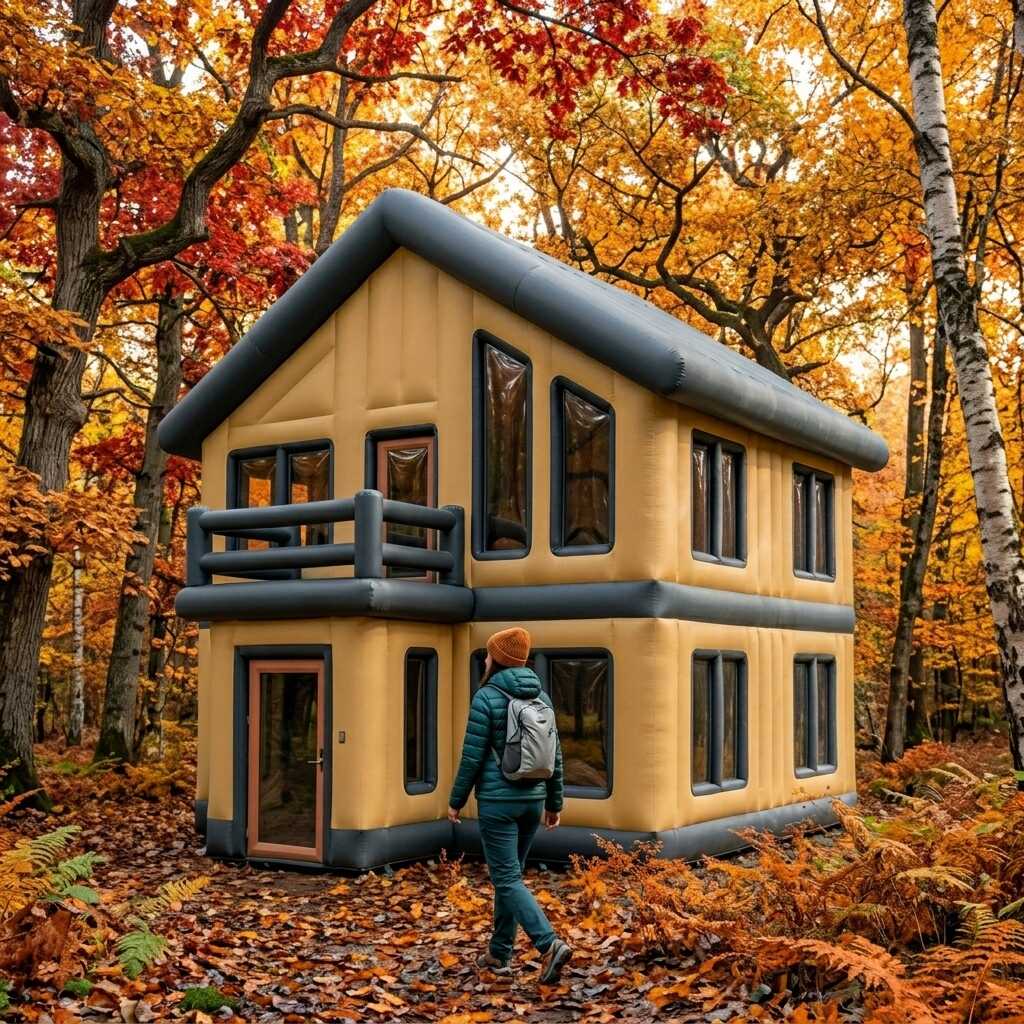
To understand why this experience is turning heads, you first have to discard everything you know about cheap, backyard bouncy castles or flimsy inflatable beach toys. The structures used for modern glamping are serious feats of temporary architecture. They are forged from heavy-duty, puncture-resistant Polyvinyl Chloride (PVC) and Thermoplastic Polyurethane (TPU), utilizing reinforced drop-stitch technology—the exact same high-pressure engineering that allows inflatable stand-up paddleboards to remain rigid as rock under the weight of a human being.
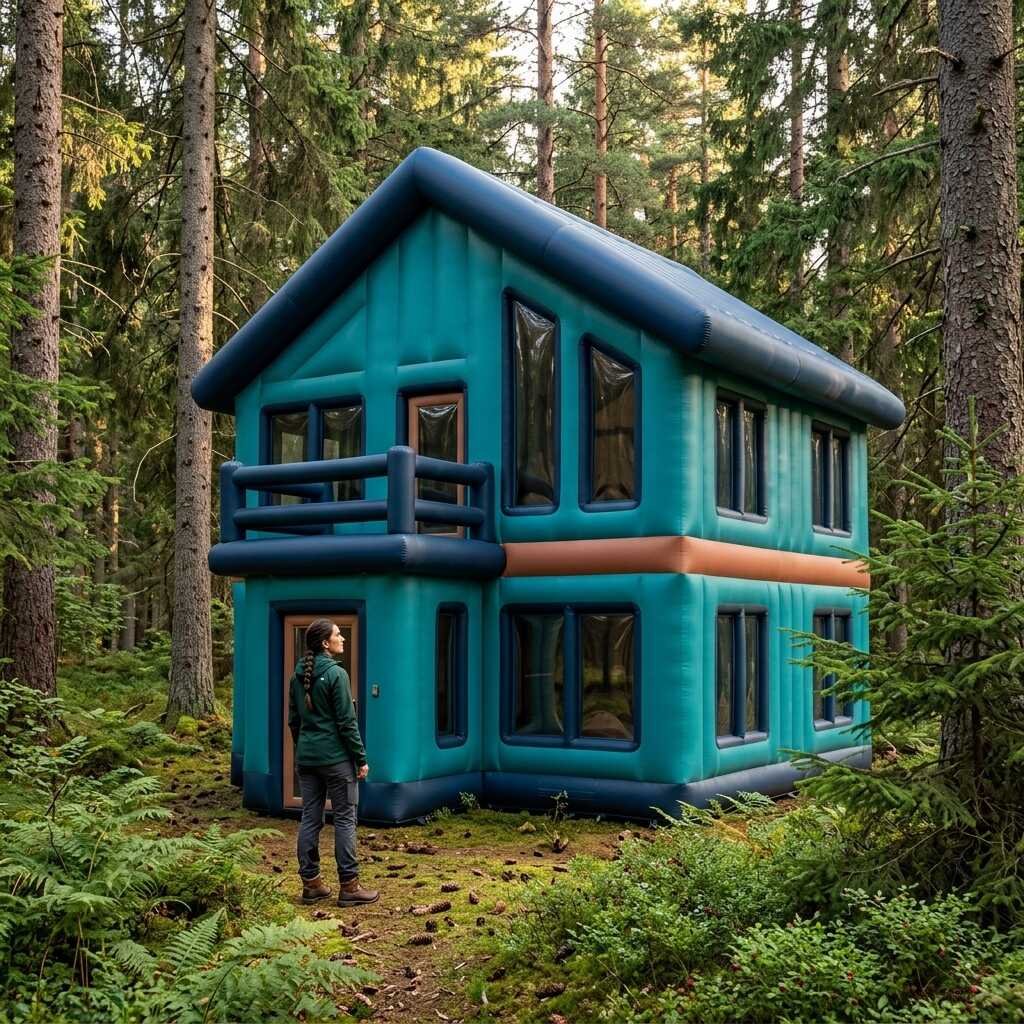
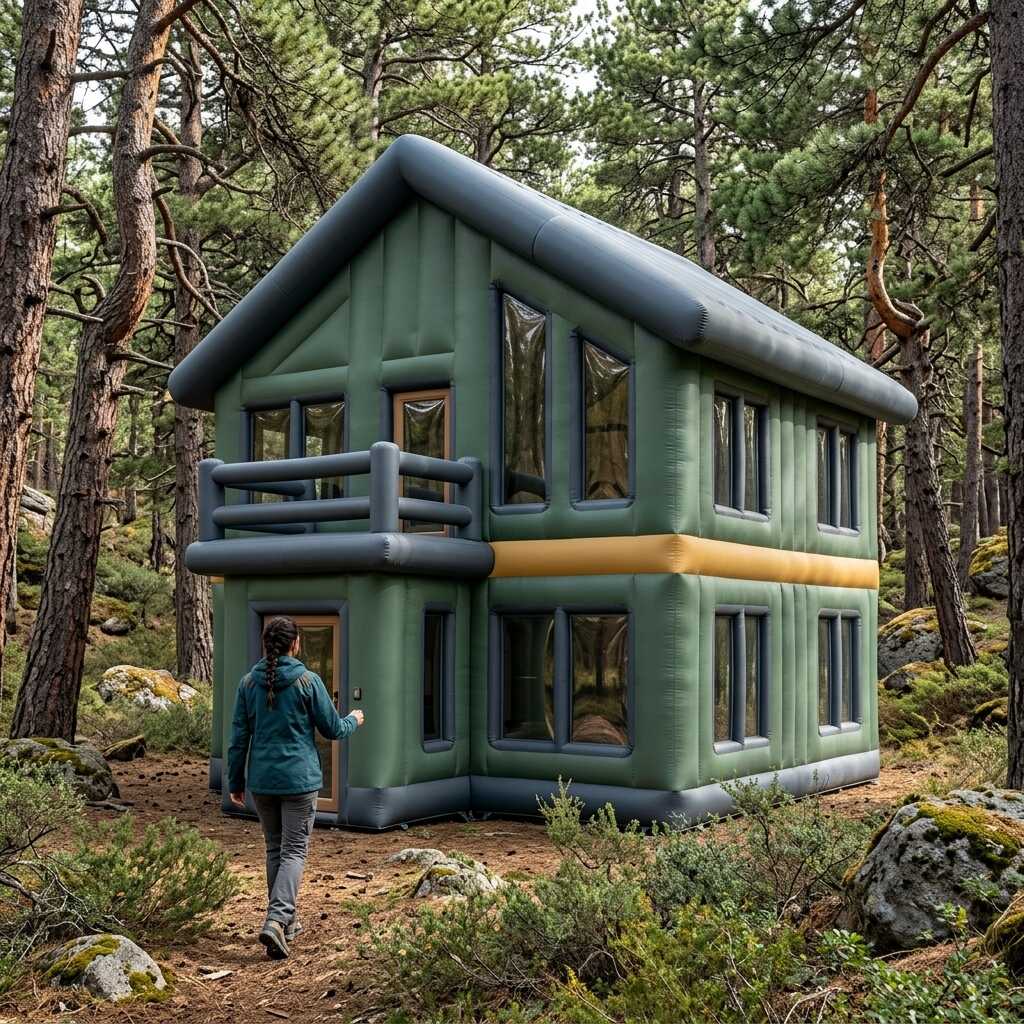
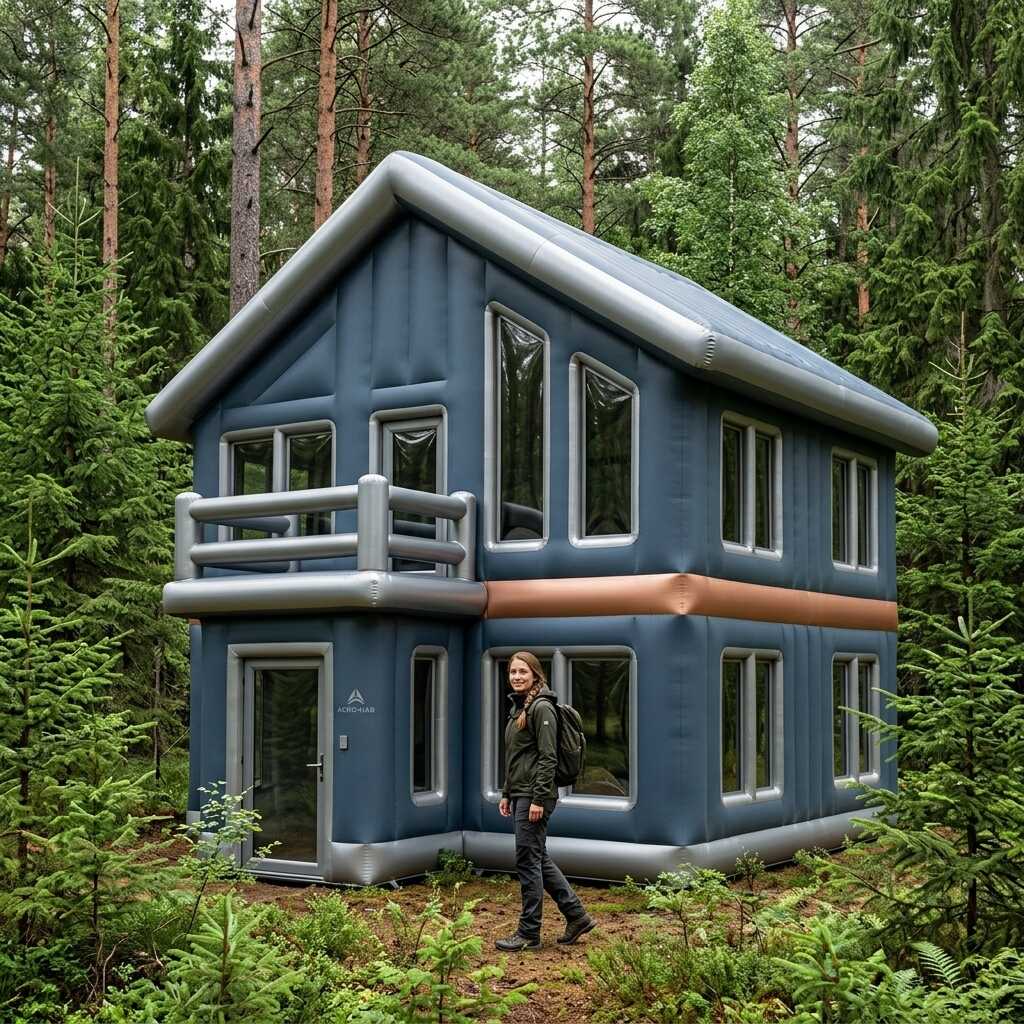
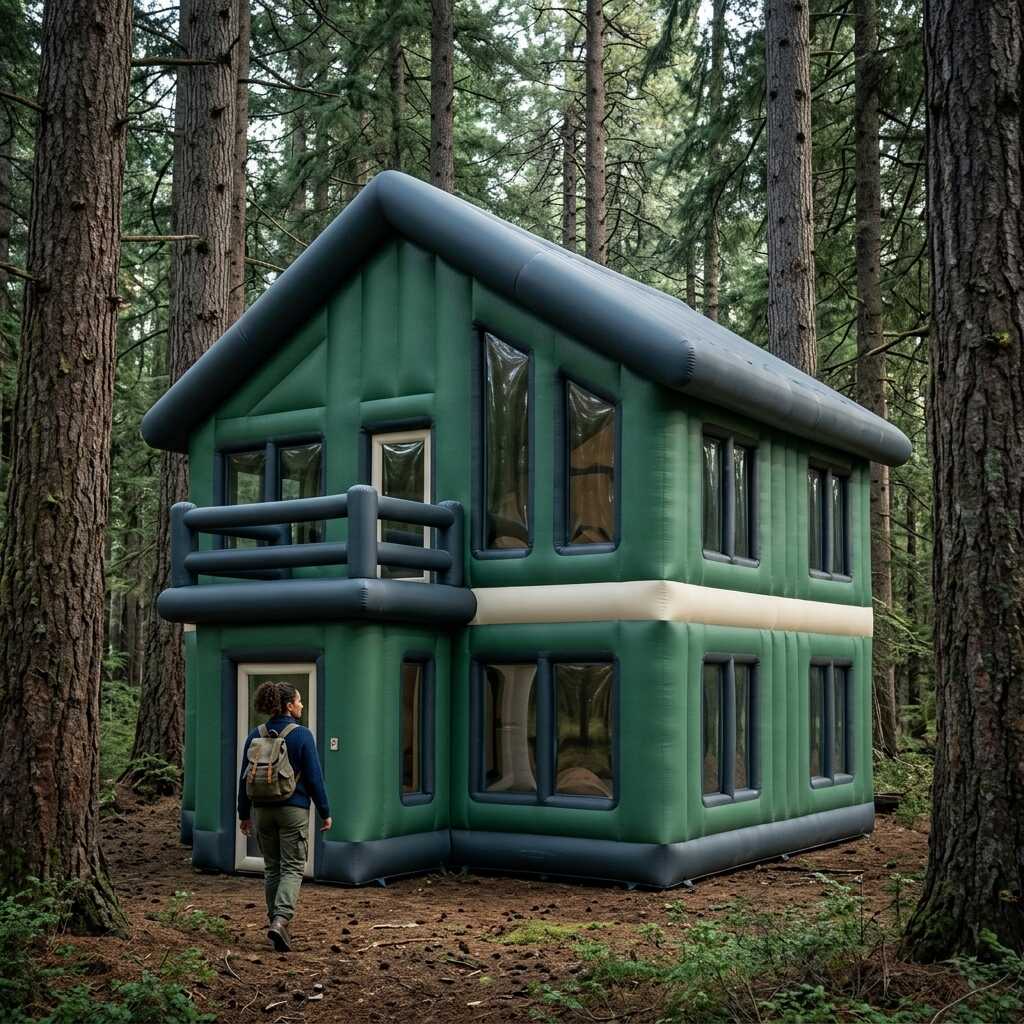
When you step inside one of these giant inflatable houses, the first thing that hits you is the sheer volume of space. Traditional tents are geometric compromises; their sloping walls and central poles force you into a constant slouch, strictly limiting usable floor space. An inflatable house, however, relies on air beams or pressurized domes that maximize vertical clearance. You get vertical walls, soaring arches, and separate architectural zones. Many designs feature distinct entry vestibules, living rooms, and separate master bedrooms connected by zippered tunnels.
This spatial freedom completely fundamentally changes your relationship with the environment. In a standard tent, you are hiding from nature in a cramped bunker. In an inflatable house, you are hosting nature in a grand pavilion. The structural integrity is so robust that these air-supported homes can withstand high winds and heavy downpours just as well as, if not better than, their pole-supported counterparts. The flexible nature of the air beams allows the structure to deflect and absorb wind energy rather than fighting it until a metal pole snaps.
COMFORT WITHOUT COMPROMISE: THE TRUE ESSENCE OF GLAMPING
The core philosophy of glamping has always been about removing the friction points of traditional camping. Purists might argue that struggling with stubborn tent poles, sleeping on hard roots, and eating rehydrated mush builds character. But for many, those physical hardships are a barrier to experiencing the profound mental health benefits of spending time in nature.
When you choose the path of camping in a giant inflatable house, those friction points completely evaporate, replaced by comforts that rival a luxury boutique hotel:
-
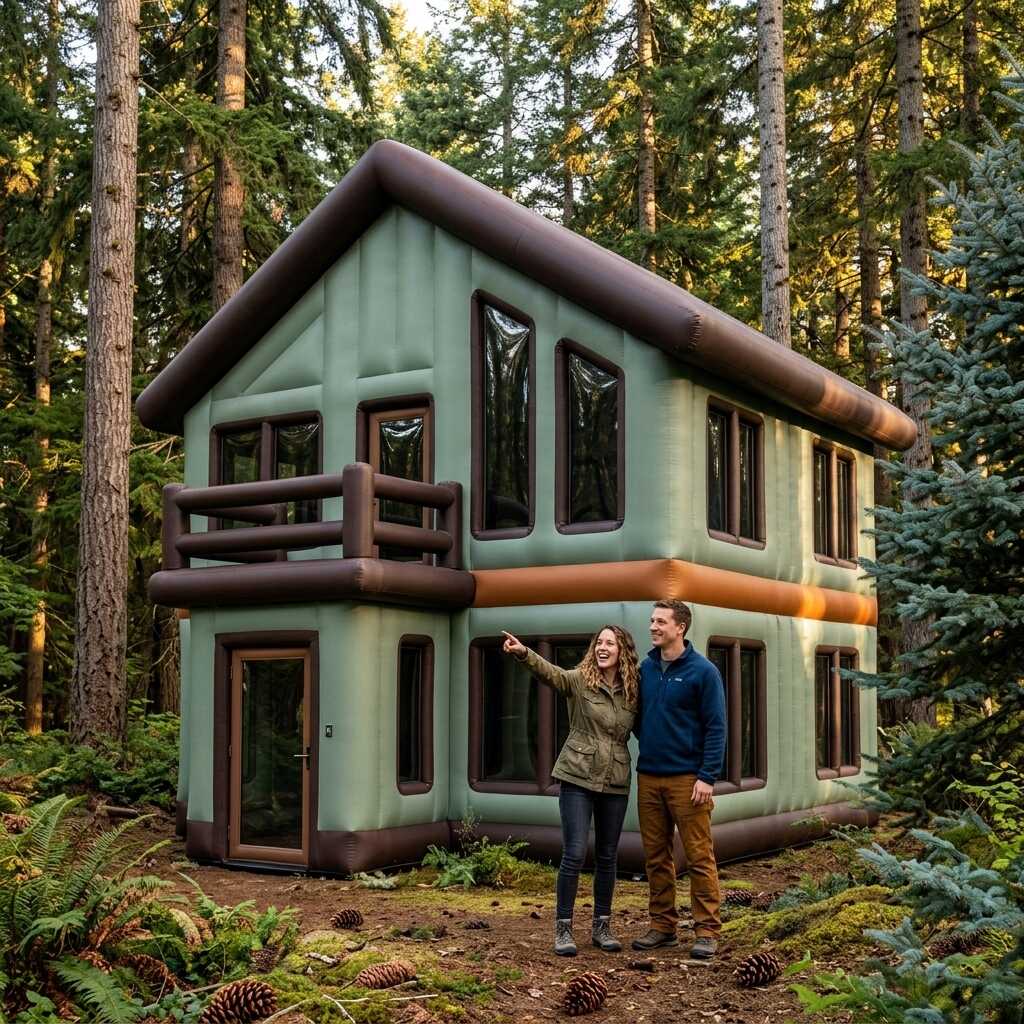
Real Furniture in the Wild: Because the floor space is expansive and flat, you are not restricted to gear that folds down into a tiny sack. You can bring real, elevated cots, inflatable sectional sofas, coffee tables, and full-sized rugs. The interior layout can be customized to look exactly like a mid-century modern living room or a cozy bohemian sanctuary.
-
Climate Control and Ventilation: Most high-end inflatable structures are designed with dedicated ports for portable air conditioning units, space heaters, or even wood-burning stoves equipped with heat-safe flashing. Combined with the natural insulating properties of a thick barrier of air, maintaining a perfect 70°F inside a dome while it is a freezing 30°F outside is entirely possible.
-
The Power of Sound Isolation: One often-overlooked benefit of thick PVC and air-filled structural beams is acoustic dampening. While a thin nylon tent wall amplifies the sound of howling wind or rustling leaves—frequently keeping light sleepers awake all night—an inflatable house creates a quiet, peaceful interior sanctuary where you can truly decompress.
THE VISUAL CONNECTION: LIVING IN A LIVING LANDSCAPE
Perhaps the most compelling argument for the inflatable house being the peak glamping experience is its unique relationship with light and landscape. A significant portion of these structures, particularly the bubble-tent variations, feature massive sections of crystal-clear, UV-protected transparent materials.
+-------------------------------------------------------------+
|               THE INFLATABLE HOUSE EXPERIENCE               |
+-----------------------------------------+-------------------+
| TRADITIONAL GLAMPING (YURTS/CABINS)     | INFLATABLE HOUSES |
+-----------------------------------------+-------------------+
| • Fixed location, view never changes    | • Fully portable  |
| • Opaque walls isolate you from nature  | • 360° views      |
| • Heavy structural footprint            | • Leaves no trace |
+-----------------------------------------+-------------------+
During the day, the interior is flooded with natural sunlight, creating a greenhouse-like warmth and brightness that makes you feel completely connected to the surrounding woods, desert, or mountains. You can sit on a plush couch, sipping fresh espresso, and watch a family of deer graze just twenty feet away, completely undisturbed by your presence.
As twilight falls, the structure undergoes a visual metamorphosis. When illuminated from within by warm lanterns, the inflatable house glows like a giant, ethereal lantern in the wilderness. From the outside, it looks like a futuristic outpost on a distant planet. From the inside looking up, the transparent ceiling disappears entirely against the dark night sky, leaving you with an unfiltered view of the constellations, the Milky Way, and, if you are lucky, the dancing curtains of the Northern Lights. It provides the absolute vulnerability of sleeping completely exposed under the stars, with the absolute security of being protected from bugs, moisture, and the biting wind.
THE PRACTICAL REALITY: SETUP, LOGISTICS, AND LOGICAL CHALLENGES
It sounds like a dream, but any seasoned outdoor enthusiast knows that every gear choice involves a series of trade-offs. To truly evaluate if camping in a giant inflatable house is right for you, we have to look honestly at the operational logistics. A human-crafted article must provide real perspective, and the truth is that managing an air-built palace requires a shift in how you plan a trip.
THE WEIGHT AND BULK REALITY
You are not backpacking with this setup. A giant inflatable house, along with its integrated floor, air beams, and repair kits, can easily weigh anywhere from 40 to over 150 pounds depending on its size. When deflated and rolled up, it occupies a significant amount of trunk space, often requiring a dedicated SUV, truck, or utility trailer. This is strictly a car-camping, overlanding, or base-camping endeavor.
THE POWER REQUIREMENT
You cannot inflate a multi-room house with a hand pump—or at least, you wouldn’t want to attempt it unless you are looking for an extreme full-body workout. Setting up an air house requires a high-volume electric air pump. Because of this, you either need to camp at a site with shore power (an electrical hookup), or you must carry a modern lithium portable power station (solar generator) capable of running a 100W to 300W pump for 15 to 30 minutes.
SITE SELECTION AND PREPARATION
Because the surface area of an inflatable house is so large, finding a perfectly flat, clear footprint is critical. Any sharp sticks, jagged rocks, or thorny brush must be meticulously cleared away before unrolling the structure. Experienced glampers always lay down a heavy-duty, ultra-thick ground tarp (or even two) to act as a sacrificial barrier against the terrain, ensuring the main structure remains pristine and puncture-free.
THE PSYCHOLOGICAL SHIFT: WHY WE CRUSH ON GIANT AIR BUBBLES
Beyond the structural specs and the creature comforts, there is a deep psychological reason why this specific form of glamping is capturing our collective imagination. Modern life is intensely digital, hyper-scheduled, and visually confined. We spend our days moving between small concrete boxes: our homes, our cars, and our offices, staring at even smaller glass boxes in our hands.
When we venture out to go camping in a giant inflatable house, we are engaging in a playful, almost whimsical rebellion against that rigid architecture. The soft curves, rounded domes, and organic shapes of air-supported structures feel inherently less clinical and more aligned with the geometry of nature. There are no sharp corners or harsh angles.
Furthermore, it satisfies a primal human desire for shelter and safety while simultaneously scratching our itch for novelty and wonder. It feels experimental. It feels like science fiction merged with a childhood blanket fort scaled up to adult proportions. That sense of playfulness unlocks a deeper level of relaxation. When you are inside a space that feels wondrous, your mind naturally detaches from the mundane anxieties of daily life, allowing the restorative rhythms of the natural world to take over.
SUSTAINABILITY AND LEAVING NO TRACE
An important angle to consider in the modern era of outdoor recreation is ecological impact. Traditional luxury glamping often requires permanent wooden platforms, concrete footings, plumbing infrastructure, and permanent structural footprints that disrupt local ecosystems, clear vegetation, and alter natural water runoff patterns.
In contrast, an inflatable house offers a high-end luxury experience with a remarkably low environmental footprint.
The Leave-No-Trace Advantage: An inflatable house requires absolutely zero permanent modifications to the landscape. It contours naturally to the earth, relies entirely on temporary air pressure for structural integrity, and when your trip is over, it deflates completely. Within an hour of packing it away, the ground can return to its natural state, leaving behind nothing but crushed blades of grass that will bounce back with the next rain.
This portability allows you to experience luxury in locations where permanent construction is strictly forbidden or ecologically irresponsible, such as fragile desert basins, sensitive beachfronts, or protected private land. It democratizes the luxury outdoor experience, shifting it away from exclusive, high-priced resorts and putting the power of curation directly into the hands of the camper.
CONCLUSION: IS IT THE ULTIMATE GLAMPING EXPERIENCE?
So, we return to our central question: Is camping in a giant inflatable house truly the ultimate glamping experience?
The answer depends entirely on what you value most in your outdoor pursuits. If your definition of the ultimate experience involves deep wilderness survival, testing your physical limits against the elements, and minimizing your gear down to the ounce, then an air-supported home will feel like an absurd, over-engineered encumbrance.
But if you view the outdoors as a canvas for relaxation, reconnection, and wonder—if your goal is to immerse yourself deeply in the beauty of the natural world without sacrificing a single shred of physical comfort—then it is hard to find anything that matches the sheer joy of an inflatable house. It successfully bridges the gap between two worlds that used to be mutually exclusive: the raw, unfiltered majesty of the wilderness and the secure, spacious luxury of modern design.
It forces us to redefine what it means to “rough it.” It proves that we don’t have to choose between looking at the stars and staying warm, nor do we have to trade a spacious room for an isolated campsite. Ultimately, camping in a giant inflatable house is more than just a trendy way to spend a weekend. It is a profound, joyful celebration of modern human ingenuity, allowing us to carry our sanctuaries with us into the wild, inflate them with the very air around us, and live beautifully right in the beating heart of nature.