
FANTASY MEETS FURNITURE: EXPLORING THE ARTISTIC APPEAL OF DRAGON CAT TREES
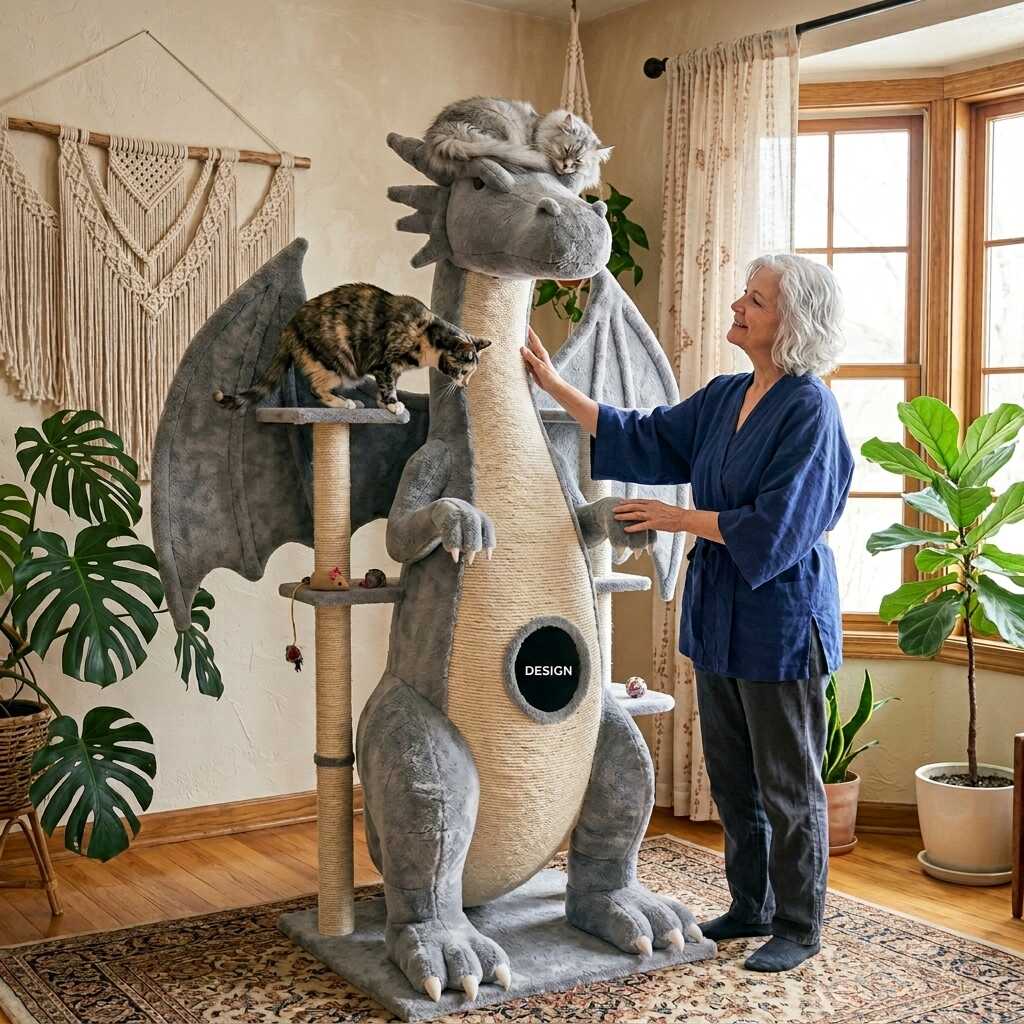
The home has always been a sanctuary, a curated collection of our memories, tastes, and the creatures we love. For those who share their lives with felines, the challenge has often been the compromise between aesthetics and utility. For decades, cat owners were forced to choose between a sleek, modern living room and a beige, carpet-covered tower that looked more like an industrial afterthought than a piece of decor. But a shift is happening in the world of interior design—a blending of the mythical and the functional. The Dragon Cat Tree represents the pinnacle of this evolution, where the wild, soaring imagination of high fantasy meets the grounded, purring reality of our domestic lives.
THE MYTHOLOGY OF THE DOMESTIC SPACE
To understand why a Dragon Cat Tree resonates so deeply with modern pet owners, one must first look at the archetypal connection between cats and dragons. Both are creatures of independence, grace, and an occasional, endearing ferocity. Dragons guard hoards of gold; cats guard the sunbeams on the rug. By bringing the form of a dragon into the home through furniture, we aren’t just buying a pet accessory; we are acknowledging the “inner dragon” of our feline companions.
This artistic appeal lies in the narrative it creates within a room. When a cat perches atop a sculpted wing or rests within the coils of a fabric serpent, the room is no longer just a space for sitting—it becomes a stage for a silent, living story. This is the essence of “Fantasy Meets Furniture.” It is about breaking the monotony of right angles and neutral tones to introduce a sense of wonder.
SCULPTURAL GRACE: BEYOND THE CARPETED TUBE
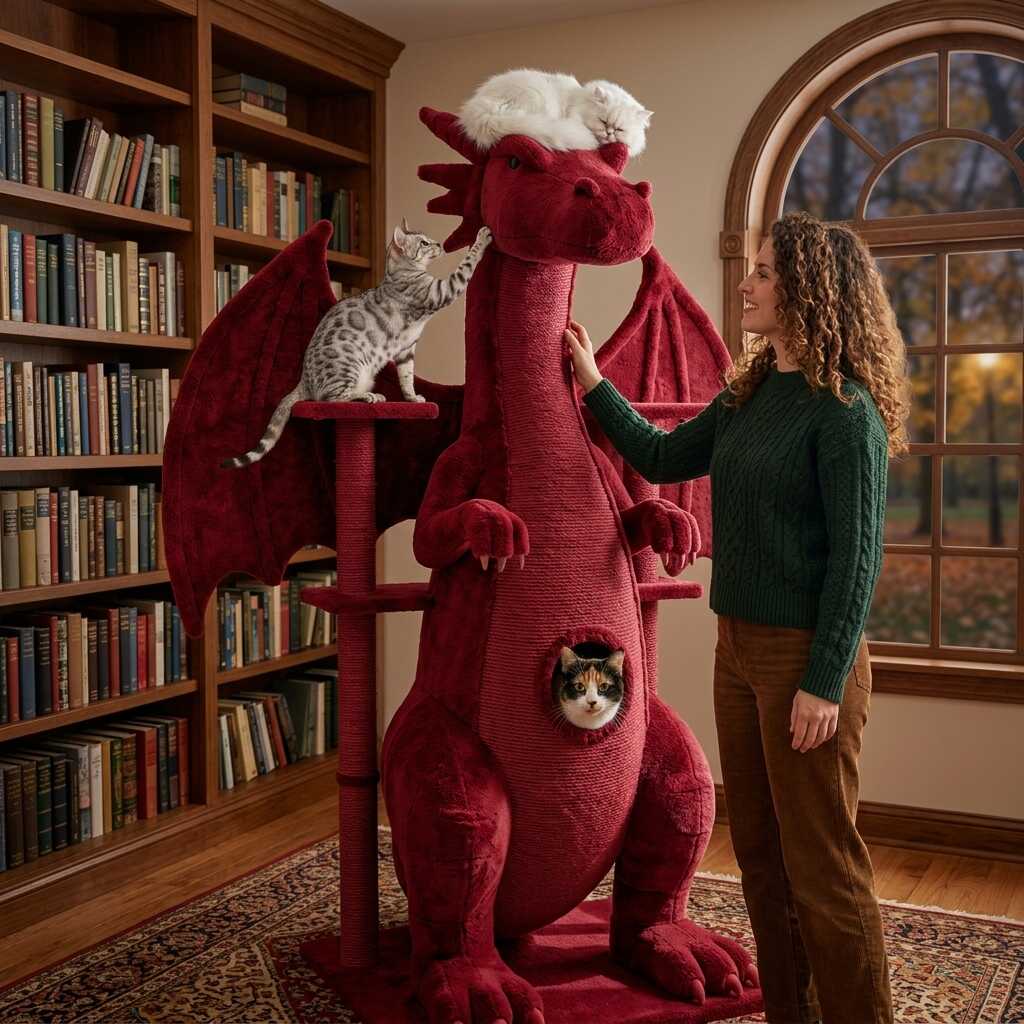
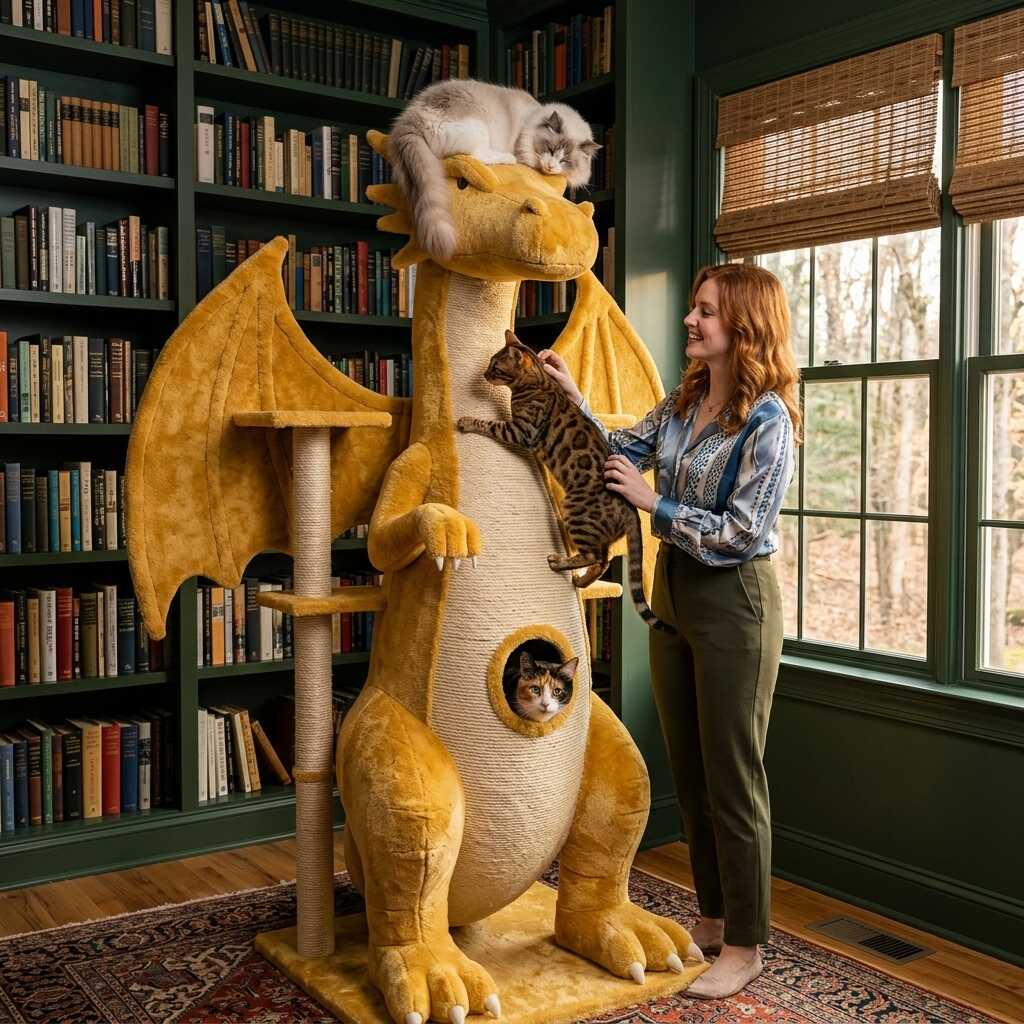
Traditional cat furniture is often functional to a fault, prioritizing cheap materials over visual harmony. In contrast, the Dragon Cat Tree is approached as a piece of sculpture. The artistic appeal begins with the silhouette. Instead of rigid vertical posts, these structures often mimic the organic curves of a mythical beast—tails that wrap around the base to provide stability, or arched necks that serve as climbing paths.
The materials used in these pieces often deviate from the standard “office carpet” look. Designers use deep emerald velvets, faux-scaled leathers, and rugged, natural sisal that mimics the texture of ancient bark or dragon hide. This attention to texture does more than please the human eye; it provides a multisensory experience for the cat. The variety of surfaces invites exploration, making the furniture an interactive art piece rather than a static object.
THE PSYCHOLOGY OF FANTASY IN INTERIOR DESIGN
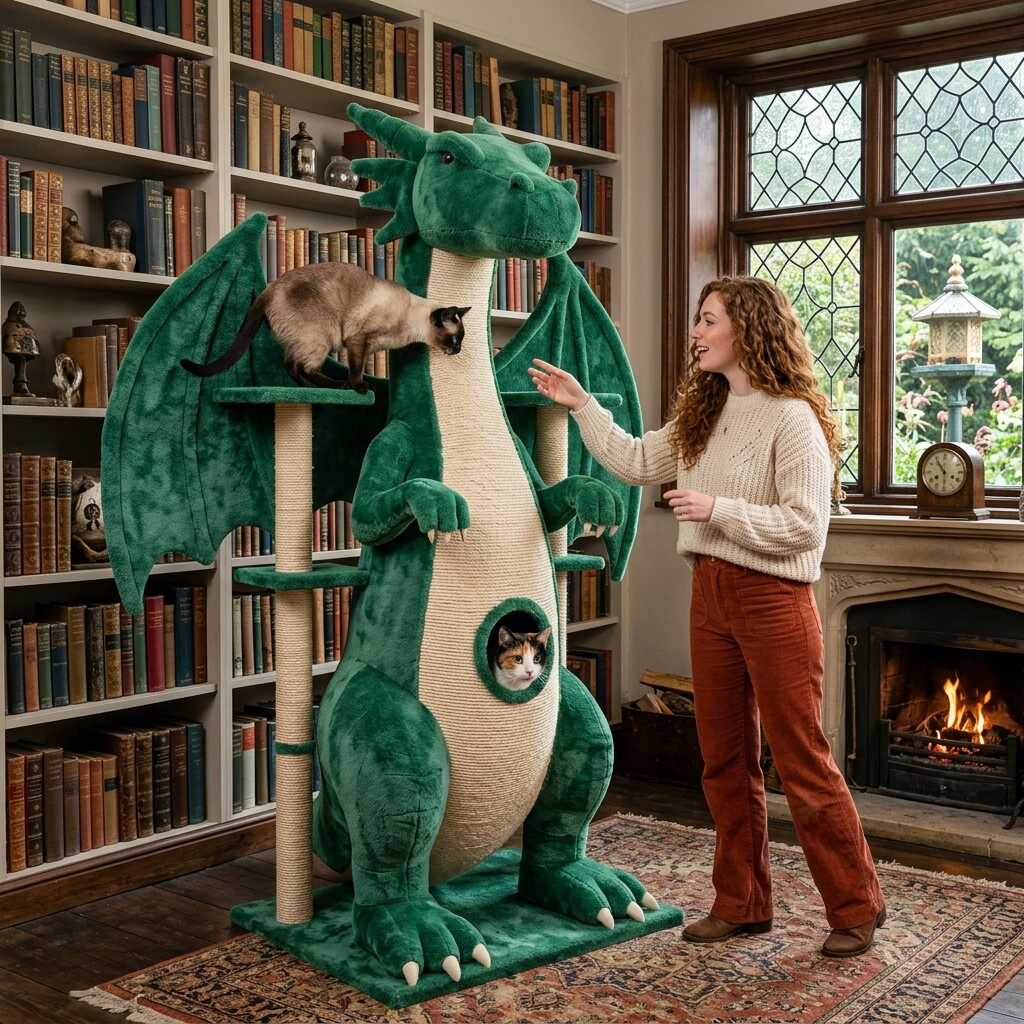
Why are we drawn to the fantastic? In an increasingly digital and sanitized world, the organic and the mythical offer a form of “enchantment.” Integrating a dragon-themed structure into a home is a rebellious act against the “beige-ification” of modern living. It signals a personality that values whimsy and storytelling.
For the cat, the “fantasy” is irrelevant, but the “function” is enhanced by the design. Dragons, by their nature, are creatures of height and hidden nooks. A well-designed tree provides the verticality that cats crave for security. When the artistic design utilizes the “dragon” shape to create tiered “clouds” or “mountain peaks,” it fulfills the cat’s biological need to survey their kingdom from above. The art serves the animal’s instinct.
A CONVERSATION PIECE FOR THE MODERN HOME
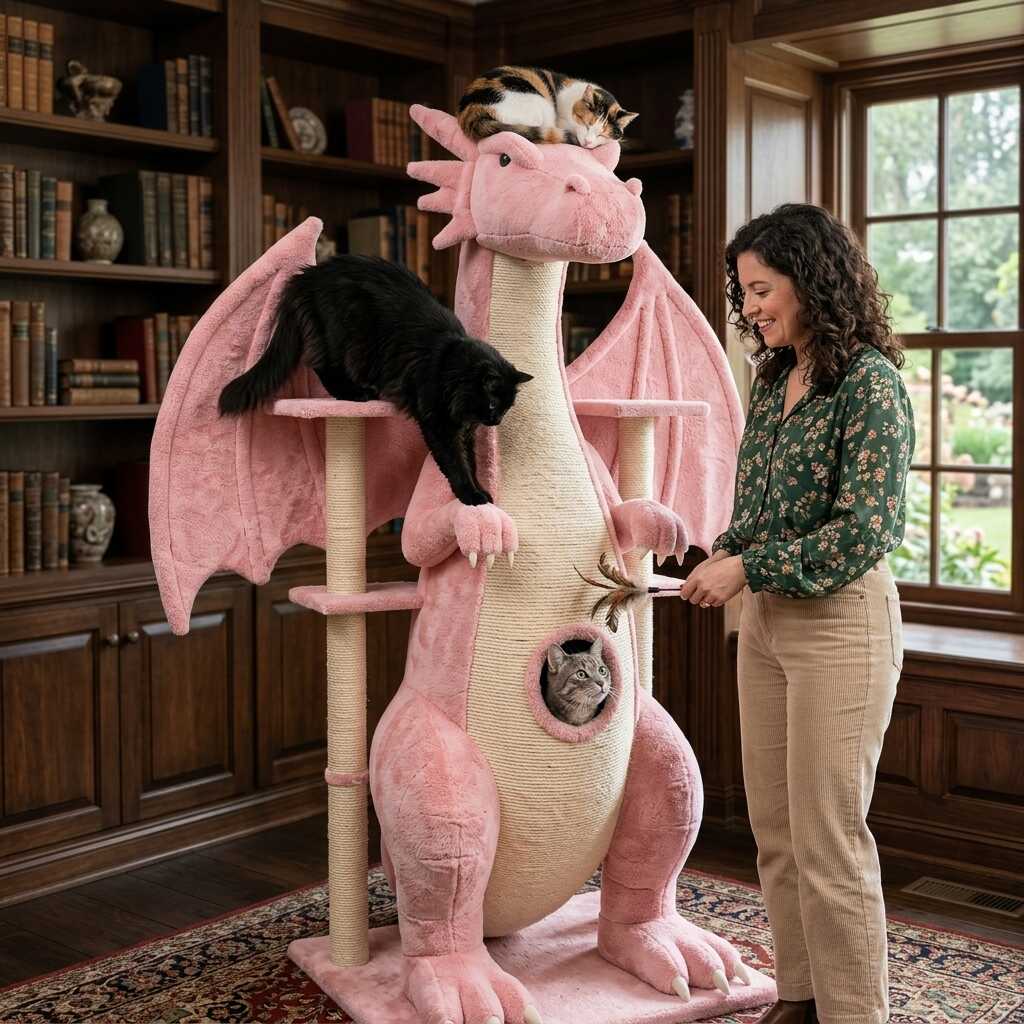
Art is meant to provoke thought and conversation. A standard cat tower is something guests politely ignore; a dragon-themed sanctuary is something they ask about. It reflects a shift in how we view our pets—not as mere residents, but as muses. We are willing to dedicate significant square footage to their happiness, and if that space can also serve as a striking visual focal point, the furniture has succeeded on two fronts.
The artistic appeal also lies in the craftsmanship. Many of these pieces are hand-finished, featuring intricate details like embroidered eyes, plush horns, or felted “fire” hanging from the platforms. These details speak to a level of care that transcends mass production. It suggests that the environment we build for our pets should be as thoughtful as the one we build for ourselves.
CONCLUSION
The marriage of fantasy and furniture is more than a passing trend; it is a testament to the deepening bond between humans and their pets. The Dragon Cat Tree stands as a symbol of this bond—a bridge between our love for epic stories and our devotion to the small, furry dragons that share our beds. By choosing pieces that reflect beauty, imagination, and myth, we transform our living spaces into realms of possibility. We no longer have to choose between a beautiful home and a happy cat. In the shadow of a dragon’s wing, both can coexist in perfect, artistic harmony.